
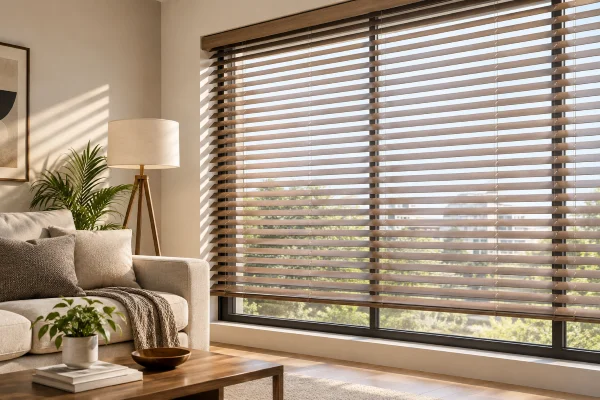
Choosing blinds comes down to seven decisions: what the room needs (privacy, light control or both), how much light you want to block, the material, the style of blind, how you’ll operate it, an accurate measurement, and your budget. Make them in that order and the right blind usually picks itself.
This guide walks through each step, with advice for Dubai homes and offices, where strong sun, heat, dust and humidity change what works best.
Quick answer: the best blinds for each room
| Room | What it needs most | Best blind types |
|---|---|---|
| Bedroom | Darkness for sleep, privacy | Blackout roller, blackout Roman |
| Living room / majlis | Glare control, view, style | Roller (light filtering), Roman, wooden, motorized |
| Kitchen | Easy cleaning, moisture resistance | Aluminium venetian, PVC roller |
| Bathroom | Privacy, humidity resistance | PVC or aluminium venetian, waterproof roller |
| Nursery / kids’ room | Blackout and cordless safety | Cordless or motorized blackout roller |
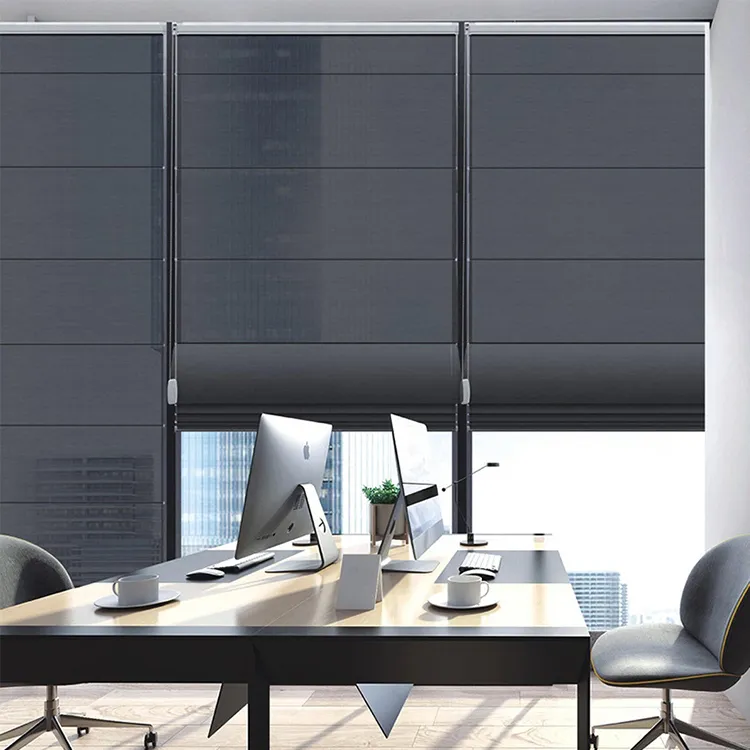
| Home office | Screen glare control without darkness | Sunscreen roller, venetian, vertical |
| Office / commercial | Large windows, durability, uniform look | Vertical, roller, motorized |
Step 1: Decide what the blinds need to do
Start with the job, not the look. Most rooms need one of three things:
- Privacy: street-facing rooms, ground floors, bathrooms and bedrooms overlooked by neighbouring towers.
- Light and heat control: west and south-facing windows that get the hardest afternoon sun in the UAE.
- Darkness: bedrooms, nurseries, home cinemas and anyone who works night shifts.
Many rooms need two of these at once. A living room might need daytime privacy while keeping the view, and darkness only for movie nights. That’s where layered options like a sunscreen roller paired with blackout curtains, or day and night style blinds, earn their place.
Step 2: Choose how much light to block
Blind fabrics come in three broad opacity levels:
- Sheer and sunscreen: cut glare and UV while you can still see out during the day. At night, with lights on inside, people can see in.
- Light filtering (dim-out): soften the light and give daytime and evening privacy, but the room stays bright.
- Blackout: block nearly all light. Best for bedrooms and media rooms. For a truly dark room, mount the blind outside the window recess so it overlaps the frame, or add side channels.
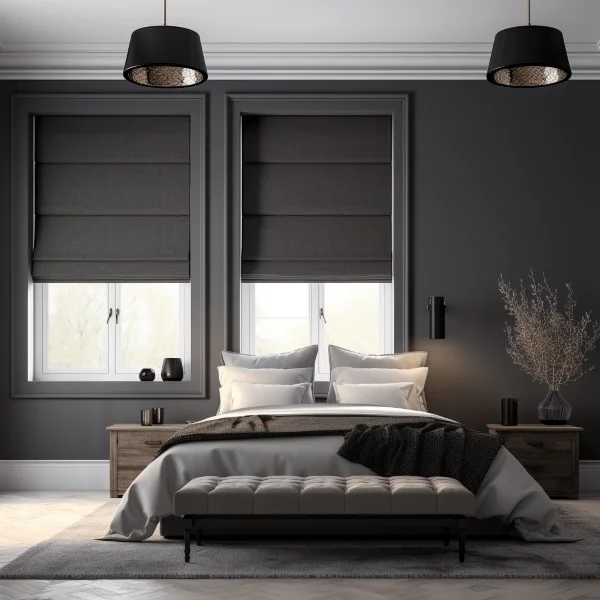
In Dubai, fabrics with a white or light-coloured backing facing the glass reflect more heat back outside. That keeps rooms cooler and reduces how hard the AC has to work. If a window gets direct afternoon sun, ask for a fabric with a reflective or thermal backing. Our blackout blinds come in fabrics made for this.
Step 3: Pick a material that suits the room
- Fabric (polyester, linen blends): the widest choice of colours and textures. Polyester resists fading in strong sun better than natural fibres.
- Wood: warm and premium. Real wood can warp in humid rooms, so keep it to living rooms, bedrooms and studies. See our wooden blinds.
- Faux wood and PVC: the wood look without the warping. Good for kitchens, bathrooms and anywhere humidity changes.
- Aluminium: slim, light, easy to wipe and inexpensive. A practical pick for kitchens and offices.
- Bamboo and natural weaves: textured and relaxed, best where you want filtered rather than blocked light. See bamboo blinds.
Dust is a fact of life in the UAE. Smooth fabrics and hard slats are easier to keep clean than heavily textured fabrics, so think about upkeep before you choose.
Step 4: Choose the type of blind
- Roller blinds: a single flat panel that rolls up into a compact tube. Clean, modern and the most versatile, available in every opacity from sheer to blackout.
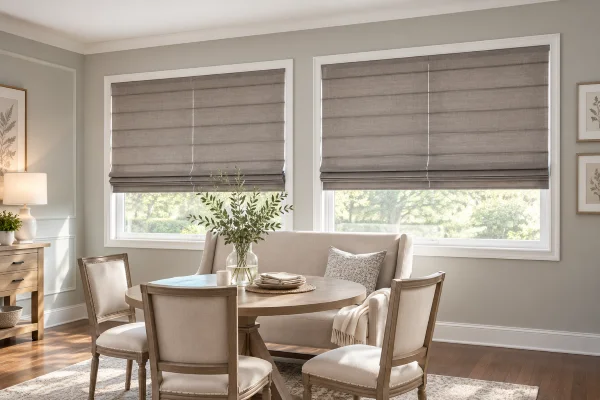
- Roman blinds: fabric that folds into soft pleats as it rises. Softer and more decorative, a good match for bedrooms and dining rooms.
- Venetian blinds: horizontal slats you can tilt, so you control light and privacy precisely without raising the blind.
- Vertical blinds: vertical slats that draw to the side. The practical choice for sliding doors, wide windows and offices.
- Wooden blinds: venetian-style blinds in real or faux wood, with a warmer, heavier look.
- Outdoor blinds: for balconies, terraces and patios, built to handle sun and wind.
If you’re torn between the two most popular options, our guide to Roman vs roller blinds compares them side by side.
Step 5: Decide how you’ll operate them
- Chain or cord: the simplest and cheapest. If you have young children, ask for a child-safety tensioner or choose a cordless option.
- Cordless (spring): you lift or pull the bottom rail by hand. Safer for kids and pets, and tidier to look at.
- Motorized: open and close by remote, wall switch, app or voice, and set schedules so blinds close before the afternoon sun hits. Best for tall, wide or hard-to-reach windows. Learn more about motorized blinds, or read our comparison of motorized vs manual blinds.
Step 6: Measure accurately (inside or outside mount)
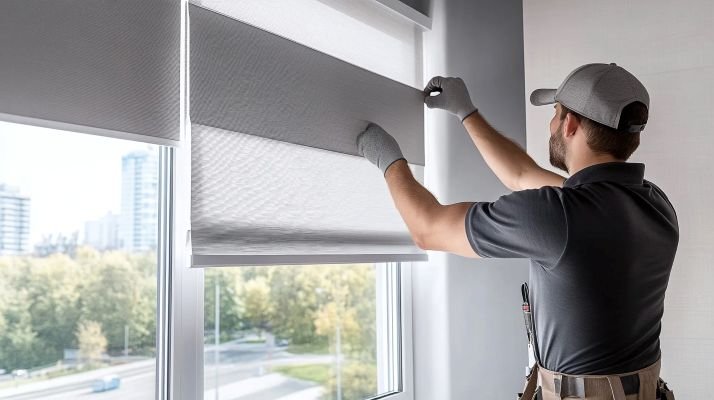
Made-to-measure blinds only look right if the measurements are right. First decide where the blind will sit:
- Inside mount: the blind sits inside the window recess for a neat, built-in look. Measure the width at the top, middle and bottom and use the smallest figure. Measure the height on the left, middle and right and use the largest.
- Outside mount: the blind is fixed to the wall or ceiling above the window and overlaps the frame. Better for blackout and for shallow recesses. Add about 5–10 cm on each side and above the frame.
Measure in centimetres with a steel tape, check the recess depth so the headrail fits, and look for handles or AC grilles that might get in the way. If you’d rather not risk it, our team can measure for you on site.
Step 7: Set a budget
The price of blinds in Dubai depends on a few factors:
- Size: larger windows need more fabric and stronger mechanisms.
- Type and material: aluminium and standard roller blinds usually cost the least. Wooden, Roman and specialist fabrics cost more.
- Fabric grade: blackout, thermal and designer fabrics cost more than basic light filtering.
- Operation: motorization adds the motor, a remote or hub, and wiring if it’s hard-wired.
- Installation: professional fitting is worth including in the budget, especially for tall windows and motorized systems.
A good way to stretch a budget is to spend more on the rooms where blinds matter most, usually bedrooms and sun-facing living spaces, and choose simpler options elsewhere.
Mistakes to avoid when buying blinds
- Choosing by colour alone and ending up with the wrong opacity for the room.
- Using real wood in a bathroom or kitchen, where it can warp.
- Inside-mounting blackout blinds and then living with light gaps around the edges.
- Forgetting cord safety in homes with children.
- Measuring once, in inches, at one point of the window.
- Ignoring the afternoon sun on west-facing glass.
Get blinds made for your windows
Select Blinds makes custom blinds for homes and offices across Dubai and the UAE, with free consultation, on-site measuring and professional installation. Browse our full range of blinds or contact us to book a visit.
Frequently asked questions
What type of blinds is best for Dubai’s heat?
Blackout or thermal roller blinds with a white or reflective backing facing the glass. They reflect heat back outside and keep rooms noticeably cooler on sun-facing windows.
Which blinds are easiest to clean?
Aluminium, PVC and faux wood blinds. You can wipe them with a damp cloth. Smooth roller fabrics are next easiest, with a regular vacuum using a brush attachment.
Are blinds better than curtains?
Blinds take less space, are easier to clean and give finer light control. Curtains add softness, insulation and a more formal look. Many homes use both, with a blind for daily light control and curtains for style and full darkness.
Should blinds be inside or outside the window frame?
Inside the frame for a neat, minimal look. Outside the frame when you need full blackout, when the recess is shallow, or when you want the window to look bigger.
What colour blinds should I choose?
Neutral tones like white, grey, beige and taupe suit most rooms and reflect heat. Darker colours look dramatic and give better outward views, but absorb more heat on sun-facing windows.
Are motorized blinds worth it?
They’re worth it for tall, wide or hard-to-reach windows, for homes with young children, and if you want blinds to close automatically before the afternoon sun.


