
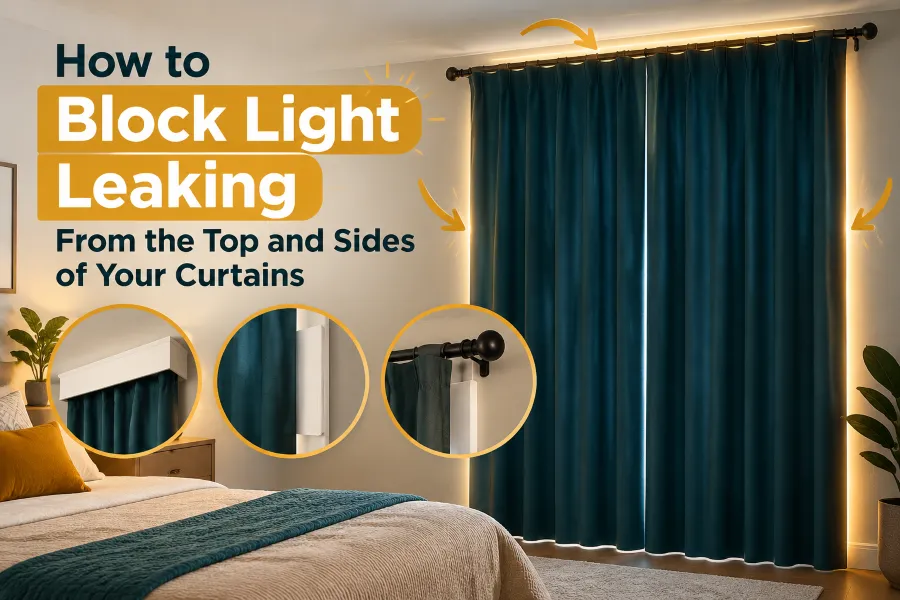
Curtains, when styled alone on the windows, will always leak light. The fabric blocks the window, but gaps remain: above the rod, down each side, between the panels, and along the floor. This article describes professional fixes that work, from a 15-minute tape job to a permanent seal, with the measurements that actually matter.
Why Light Leaks Around Window Curtains?
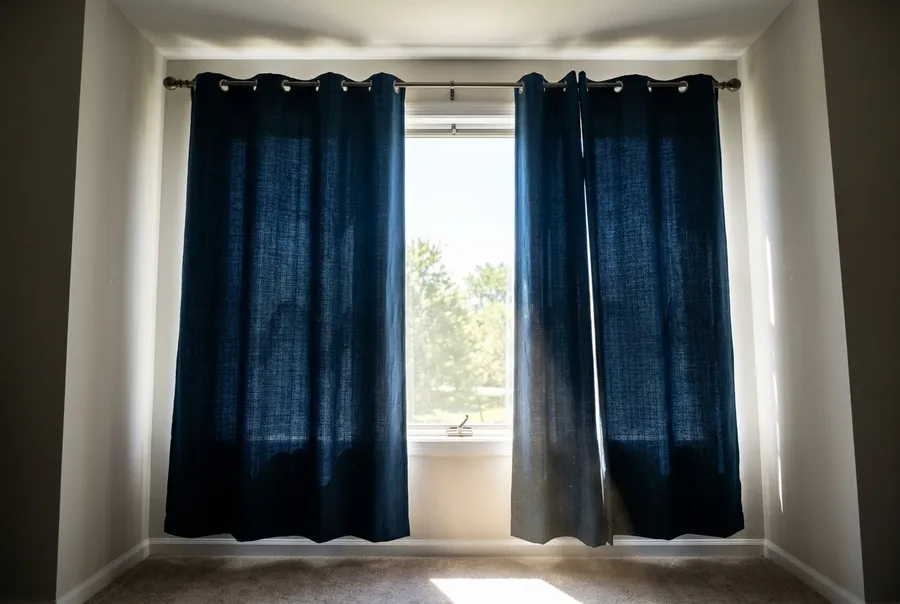
Even curtains sold as blackout leak, because the fabric is only one part of the problem. There are four separate gaps, and most rooms have all four.
The top gap. Light passes over the rod and down behind the curtain. On a standard rod, this is the biggest leak, and people notice first because it throws a bright line across the ceiling.
The side gaps. The curtain hangs flat while the wall sits behind it, so daylight travels around the outer edge of each panel. Rods mounted inside the window reveal make this worse, not better.
The centre gap. Two panels that meet in the middle do not seal. They need to overlap by several centimetres, and most ready-made pairs are cut too narrow to do it.
The floor gap. Curtains that stop short of the floor let light bounce off the tiles. In Dubai apartments with pale flooring, this reflected light is brighter than people expect.
Fixing the fabric does nothing for any of these. You have to close the gaps.
-
Find Your Leak First
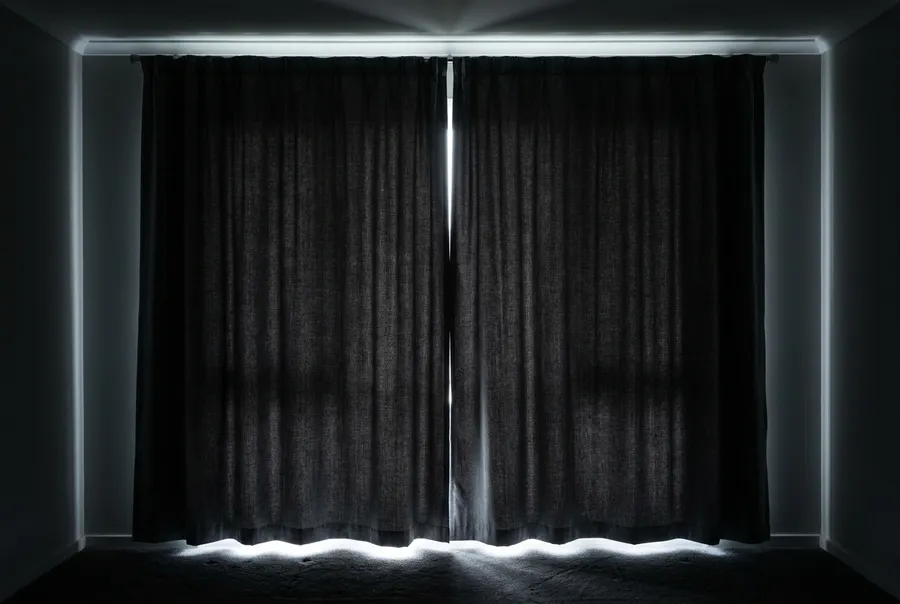
Before buying anything, work out which gap is actually letting the light in. Go into the room during the brightest part of the day, close the curtains fully, and switch the lights off. Then look for the glow.
- A bright line along the ceiling or the top of the wall means light is coming over the rod. Fix the top gap.
- Vertical strips of light down one or both edges mean side gaps. Fix the sides.
- A thin vertical line in the middle of the window means panels are meeting but not overlapping.
- A glow along the skirting or across the floor means the curtain is too short, or the floor is reflecting light in from elsewhere.
- Light coming through the fabric itself means the fabric is dim-out, not blackout. No amount of sealing will fix this one.
Most rooms have two or three of these at once. Fix the top gap first, because it is usually the largest and the cheapest to close.
-
Quick Fixes You Can Do Today
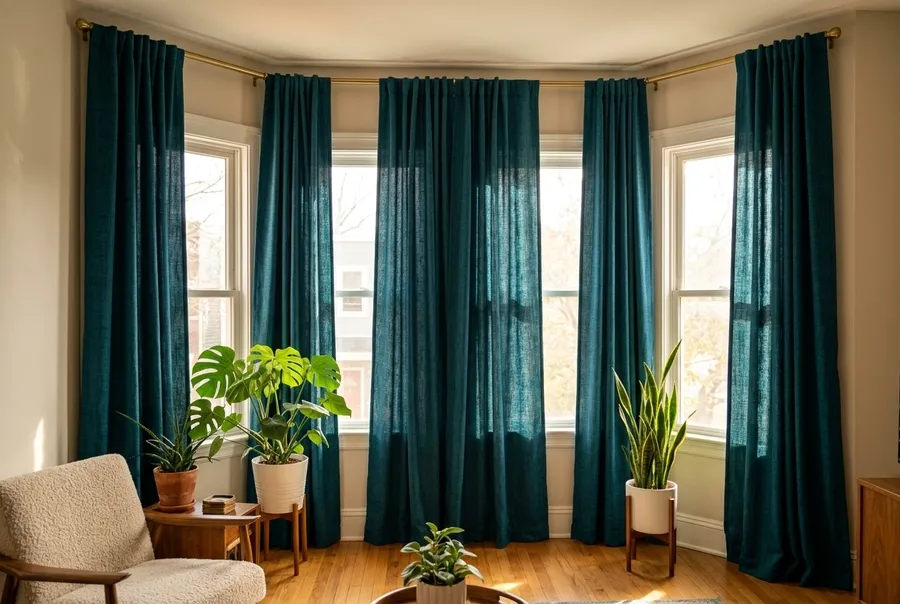
All of these are reversible, need no drilling beyond what is already there, and suit renters. None of them give perfect darkness on their own, but together they remove most of the light.
Magnetic tape or hook-and-loop strips on the side edges: Stick one strip to the wall beside the window and the matching strip to the curtain’s back edge. The curtain then seals against the wall instead of hanging away from it. This is the single most effective cheap fix for side leaks. Use magnetic tape on a metal frame and hook-and-loop on plaster or paint.
Extend the rod past the window frame: If your rod ends level with the frame, move the brackets outward. Every centimetre of extra rod is a centimetre the curtain can overlap the wall instead of the glass.
Raise the rod and mount it outside the reveal: An outside-mounted rod above the frame blocks far more light than one fitted inside the reveal. Inside mounting looks neater but creates gaps on all four sides.
Overlap the panels in the middle: Pull the inner edges past each other rather than letting them meet. A hook-and-eye or a single magnet at chest height holds the overlap closed.
Add a floor-length drop: If the curtain stops above the floor, lowering the rod or replacing the panels so they just brush the floor removes the bottom glow.
| Fix | Rough cost | Time | Renter-safe |
| Magnetic or hook-and-loop side strips | AED 15-80 | 15-20 min | Yes |
| Move rod brackets outward | Free | 30 min | Needs 2 new holes |
| Raise rod above the reveal | Free | 30-45 min | Needs new holes |
| Centre overlap with hook-and-eye | AED 15-35 | 10 min | Yes |
| Floor-length panel swap | Varies | Same day | Yes |
Costs are rough guides for Dubai hardware and fabric shops, not quotes.
-
Upgrades Worth the Effort
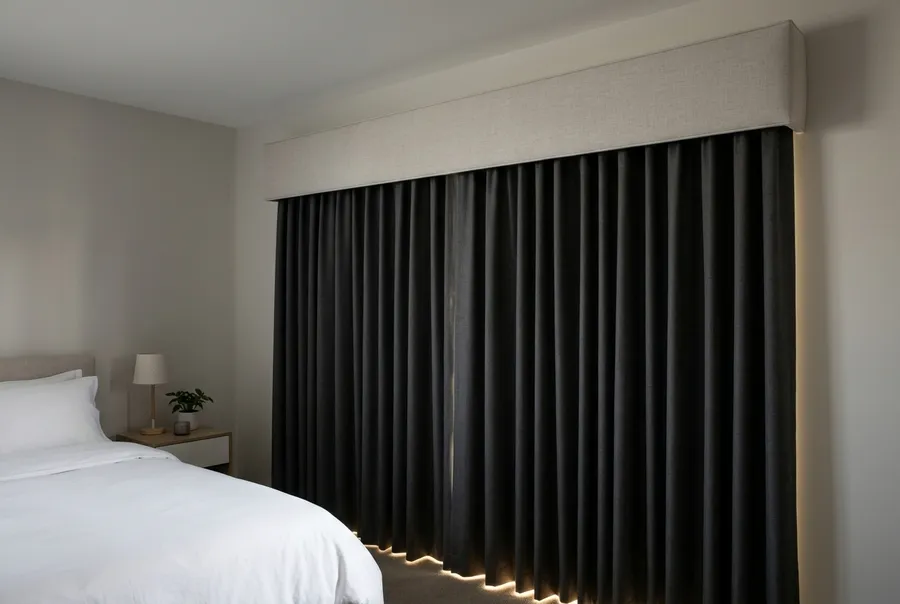
These cost more and take longer, but they close the gaps properly rather than patching them.
A wrap-around or return rod: Instead of ending in a straight bracket, the rod curves back to meet the wall at each end. The curtain travels around that curve and touches the wall, closing the side gap by design rather than by tape. This is the cleanest single solution for side leaks.
A pelmet box or cornice above the rod: A three-sided box fixed above the window closes the top gap completely. It also hides the track, which most people prefer visually. A cornice is the permanent version of a valance and works considerably better.
A valance: A fabric header hung in front of the rod. Easier than a cornice and more affordable, but it only diffuses the top light rather than blocking it, because the ends stay open.
Blackout lining added to existing curtains: If you like your curtains and only the fabric is the problem, a workshop can add a dense blackout lining behind the existing panels. You keep the look and gain the light control.
Wider panels: A curtain needs to be substantially wider than the window to seal at the sides and still gather properly. Panels cut to the exact width of the rod will always pull flat and leak. More on the numbers below.
Window film on the glass: Applied directly to the pane, this cuts glare and heat but does not create darkness. Treat it as a heat and privacy measure, not a blackout one.
-
The Permanent Fix: Side Channels
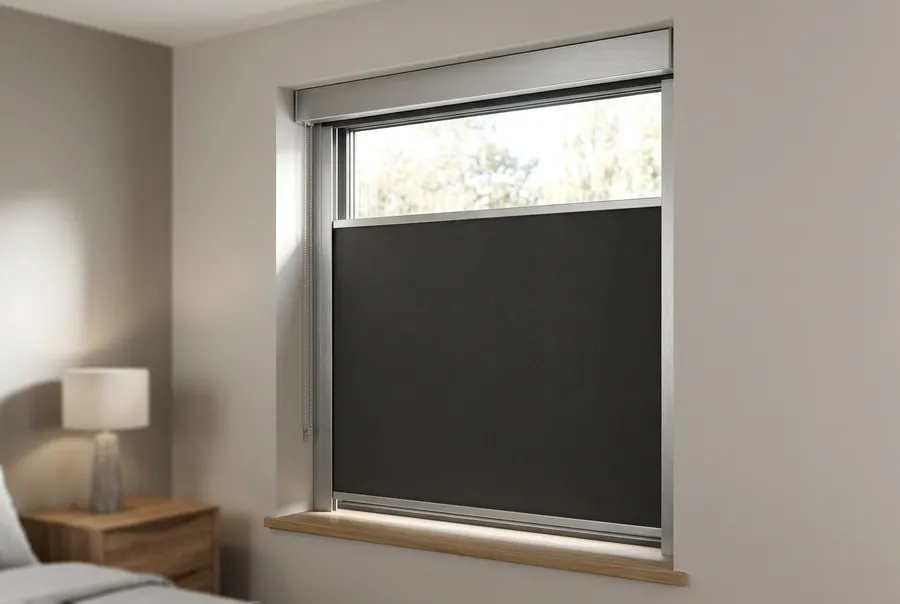
If you want genuine darkness rather than a big improvement, curtains are the wrong tool. The answer is a blackout roller blind fitted inside aluminium side channels, with a cassette or fascia at the top.
Here is why it works where curtains cannot. The blind fabric runs inside a track on each side, so there is no side gap to leak through. The cassette encloses the roll at the top, closing the top gap. A bottom seal or sill channel closes the floor gap. All four edges are sealed by the hardware itself, not by tape or overlap.
This is the standard specification for hotel guest rooms, home cinemas, nurseries and anyone working night shifts. It is what a professional installer fits when the brief is total darkness.
A few practical points:
- Fabric alone is not enough: A blackout roller blind without channels still leaks down both sides. The channels are the part that does the work.
- It layers with curtains: Most people keep the curtains for the look and fit the blind behind them. The blind does the blocking, the curtains do the styling.
- A double track is the alternative: if you prefer fabric throughout, sheer on the front track for daytime, blackout on the back track for night. This closes less light than channels but looks softer.
- Motorized options exist: for high or hard-to-reach windows, motorized window treatments are a good fit, controlled by remote, app, or voice.
If you have already tried tape, liners and a cornice and still see light, this is the step that ends the problem.
-
Measurements That Matter
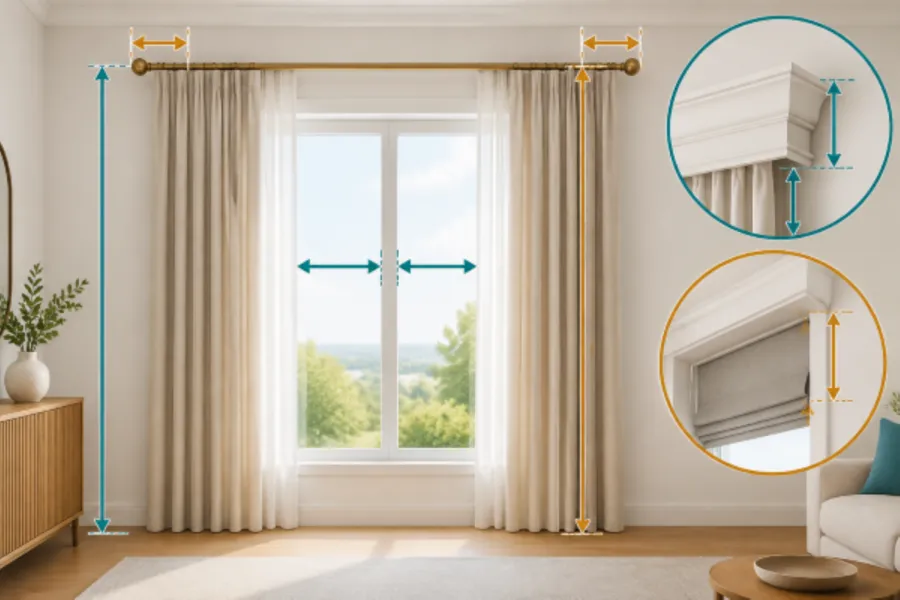
Most light-leak problems are measurement problems. These are the figures to work to.
| What to measure | Target | Why |
| Rod height above the window frame | 15-20 cm | Lifts the top gap away from the glass and lets a cornice sit over it |
| Rod extension past each side of the frame | 20-25 cm | Gives the curtain wall to overlap instead of glass |
| Panel fullness (total fabric width vs rod width) | 2 to 2.5 times | Below 2x the curtain pulls flat and gaps at the sides |
| Centre overlap between the two panels | 8-10 cm minimum | Panels that only meet will separate and leak |
| Cornice or pelmet depth | 10-15 cm | Deep enough to clear the rod and the curtain header |
| Cornice or pelmet drop | 12-18 cm | Covers the header and the top of the fabric |
| Curtain length | Floor, or 1 cm above | Stops reflected light off pale flooring |
| Side channel depth (blinds) | Per manufacturer | The channel must hold the fabric edge fully inside it |
Two Notes.
Fullness of 2 to 2.5 times is the normal range for pleated and wave headings; eyelet curtains typically sit lower and seal less well. And if you are ordering made-to-measure, give the installer your rod or track width, not your window width, or the panels will come back too narrow.
-
Floor-to-Ceiling Windows and Sliding Doors

Most advice on this topic assumes small windows set in a wall, where you can simply extend the rod past the frame. Many homes in Dubai do not have that option, and standard fixes fall apart.
No wall to extend onto: In an apartment with floor-to-ceiling, wall-to-wall glazing, you cannot move the rod outward. The fix has to work within the opening: side channels fitted to the reveal, or a track mounted to the ceiling so the fabric sits tight against the glass line.
Ceiling-mounted tracks beat wall rods here: A recessed or surface ceiling track removes the top gap entirely, because there is no space above the track for light to pass through.
Sliding doors need stack space: Curtains and blinds have to clear the door when open, so plan where the fabric sits when drawn back. A panel track or a wide roller with channels usually handles this better than curtains.
The sun is the real problem: Dubai daylight is far brighter than the conditions most of this advice was written for. A gap that would be a faint glow in a temperate climate reads as a floodlight here, and afternoon sun on west-facing glass adds heat as well as light. Sealing the gaps properly reduces the load on your AC, not just the brightness.
Pale flooring reflects: Marble, porcelain, and light tile bounce daylight upward. Floor-length curtains matter more here than on carpet.
Renting?Many buildings restrict drilling. No-drill tension rods, adhesive channels, and magnetic strips are the practical route, and your building management may need to approve any track fixed to the ceiling.
-
Which Fix Should You Choose?
| Your situation | Start with |
| Renting, cannot drill | Magnetic or hook-and-loop side strips, centre overlap, tension rod |
| Bright line across the ceiling | Cornice or pelmet box, or raise the rod above the reveal |
| Light down both side edges | Wrap-around return rod, or side strips as a cheaper stopgap |
| Thin line in the middle | Wider panels with 8-10 cm overlap |
| Light coming through the fabric | Add a blackout lining, or replace with blackout fabric |
| Bedroom, need real darkness for sleep | Blackout roller blind with side channels |
| Nursery or shift worker | Blackout blind with side channels and a cassette |
| Home cinema or media room | Blackout blind with channels, plus curtains for acoustics |
| Floor-to-ceiling glazing | Ceiling-mounted track, or channels fitted to the reveal |
| Sliding or balcony doors | Panel track or wide roller with channels |
| West-facing room, heat as well as light | Thermal or metallised blackout fabric with channels |
| Want the curtain look, need the darkness | Blackout blind behind existing curtains |
If you are unsure, fix the top gap first. It is the biggest leak in most rooms and the cheapest to close.
-
Common Mistakes That Keep Letting Light In

Buying blackout fabric and expecting blackout.
The fabric is maybe half the job. Without sealing the edges, you get a dark room, not a black one.
Mounting the rod inside the window reveal.
It looks tidier and leaks on all four sides. The outside mounting blocks far more light.
Order panels the same width as the window.
They will hang flat and gap at the sides. You need 2 to 2.5 times the track width in fabric.
Letting the panels meet instead of overlap.
Two edges touching will always separate. Overlap them.
Using a valance and expecting it to seal.
A valance softens the top light. A cornice blocks it. They are not the same thing.
Taping foil or cardboard to the glass.
It blocks light and ruins the room, the resale impression, and often the window seal. Better fixes cost about the same, and this tends to trap heat against the pane.
Forgetting the floor.
People seal three edges perfectly and leave a bright strip along the skirting.
Ignoring the light source.
If a streetlight or a neighbour’s balcony light is the actual problem, a blind fixes it. If sunrise is the problem, you need the full seal.
Get It Sealed Properly
If you’ve tried the quick fixes and still have light where you want darkness, the gap is in the hardware, not the fabric. We fit blackout roller blinds with side channels and cassettes across Dubai, and we can measure your windows free of charge to tell you exactly what will close the leak.
Book a free measurement visit, or send us a photo of the window on WhatsApp, and we will tell you which fix you need.
Frequently Asked Questions
Do Blackout Curtains Block All Light?
No. Blackout fabric blocks light through the fabric, but light still passes around the top, sides, centre, and bottom. For total darkness, you need sealed edges, which means side channels on a blind or a cornice plus a return rod on curtains.
What Is The Fastest Way To Stop Light Coming In At The Sides?
Use magnetic tape or hook-and-loop strips on the curtain’s outer edges to seal it against the wall. It takes about 15 minutes and costs very little.
How Far Past The Window Should The Curtain Rod Extend?
About 20-25 cm on each side. That lets the curtain overlap the wall rather than the glass.
How High Above The Window Should The Rod Go?
Around 15-20 cm above the frame. Higher also makes the window look taller and leaves room for a cornice.
How Wide Do My Curtains Need To Be?
Total fabric width should be 2 to 2.5 times your rod or track width. Panels cut to the window width will pull flat and gap at the sides.
Should The Two Panels Meet Or Overlap In The Middle?
Overlap by at least 8-10 cm. Panels that only meet will drift apart and leak a vertical line of light.
Is Inside Or Outside Mounting Better For Blocking Light?
Outside mounting, clearly. An inside-mounted rod sits within the reveal and leaves gaps on every side.
What Are Side Channels And Do I Need Them?
Side channels are aluminium tracks fitted either side of a roller blind so the fabric edge runs inside them. They are the only way to fully close the side gaps, and they are what hotels and cinemas use.
Can I Get Real Darkness On Floor-To-Ceiling Windows?
Yes, but not with a wall-mounted rod. You need a ceiling-mounted track or side channels fitted to the reveal, because there is no surrounding wall to extend onto.
Will Blocking Light Also Reduce My Cooling Bill?
Sealing the gaps helps, especially on west-facing windows in summer, because you stop both light and solar heat. Thermal or metallised blackout fabric adds to the effect. Savings depend on your glazing, orientation, and how long the blinds stay closed.
Can I Keep My Curtains And Still Get Full Darkness?
Yes. Fit a blackout blind with side channels behind the curtains. The blind does the blocking, and the curtains stay for the look.
What About A Valance Instead Of A Cornice?
A valance diffuses the top light but leaves the ends open. A cornice or pelmet box is three-sided and actually blocks it.


1 Comment.
[…] short; light over the top means it’s mounted too low or too far from the wall. Our guide toblocking light leaking from the top and sides of your curtains covers every […]