
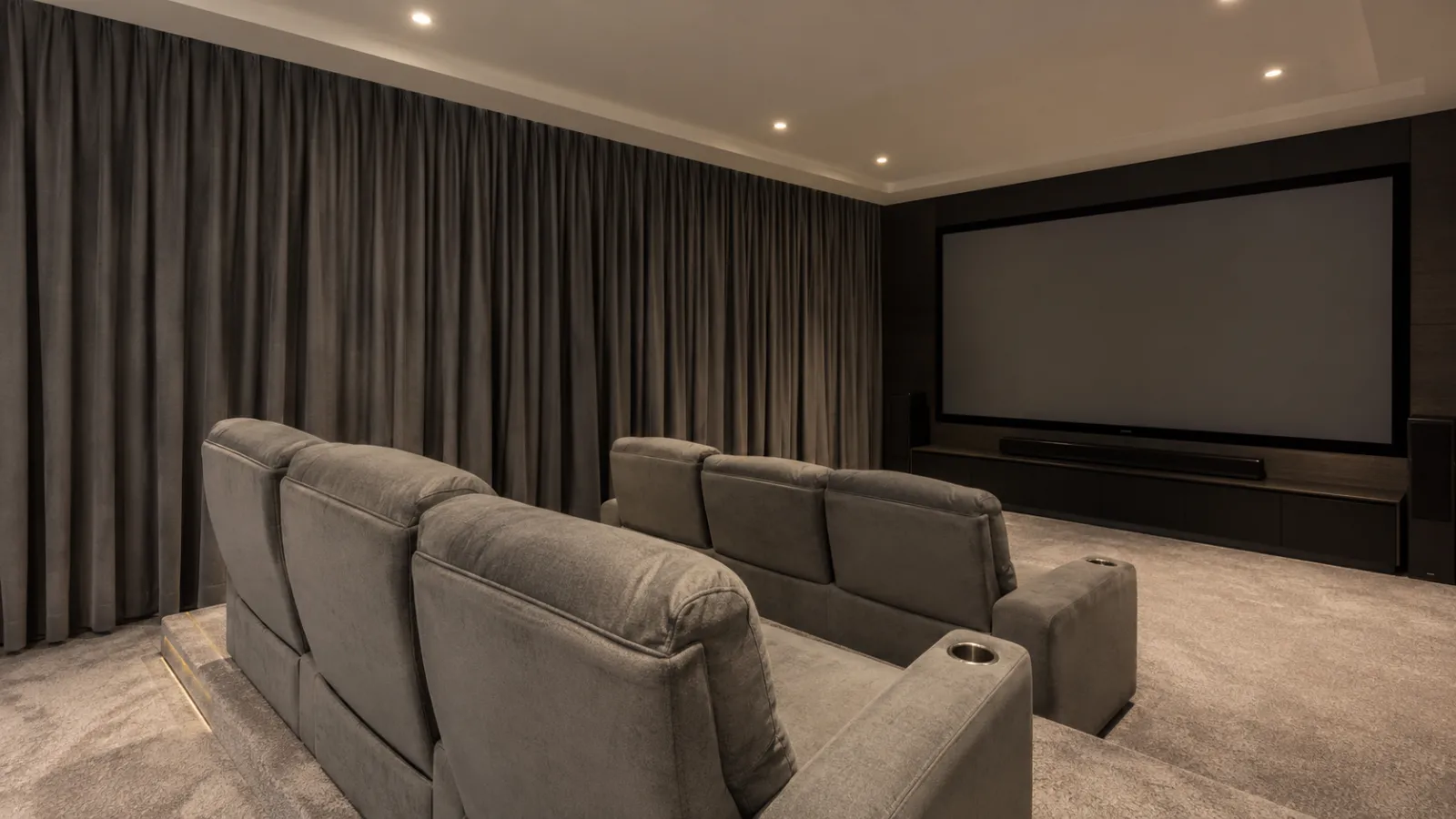
The best window treatments for a home theater are blackout curtains or blackout roller blinds, ideally layered together and fitted so no light creeps in around the edges. Heavy velvet or soundproof curtains also soften echo, and motorized tracks let you darken the room without leaving your seat.
In Dubai, a home cinema has one extra problem: strong sun on large glass windows. So the right setup has to block light, cut glare, and keep the room cool. This guide compares your options, shows where light leaks in and how to stop it, and explains which setup suits which room.
What Your Home Theater Needs From Its Windows
A good home cinema window treatment does four jobs:
- Blocks light. Even a little daylight washes out a projector image and makes a TV screen harder to see.
- Stops glare and reflections. Light bouncing off windows, shiny fabric or pale walls shows up on the screen.
- Softens sound. Hard glass reflects sound and makes dialogue echo. Thick fabric absorbs some of it.
- Keeps heat out. A west-facing window in Dubai can make a closed room warm by the afternoon, and a sealed cinema room has nowhere for that heat to go.
Home Theater Window Treatments Compared
| Option | Light blocking | Sound | Heat control | Best for |
|---|---|---|---|---|
| Blackout curtains | Very high when fitted wall to wall | Good | Good | Dedicated cinema rooms and media rooms |
| Velvet curtains with blackout lining | Very high | Very good (heavy pile) | Good | A luxury cinema look |
| Soundproof curtains | Full blackout | Best of all fabric options | Excellent | Rooms near roads, or keeping movie sound in |
| Blackout roller blinds | High (thin gaps at the sides) | Low | Good | Clean, minimal rooms; layering under curtains |
| Roman blinds with blackout lining | High | Fair | Good | Smaller windows and softer, tailored looks |
| Motorized curtains or blinds | Same as the fabric used | Same as the fabric used | Same as the fabric used | Large windows and one-touch movie scenes |
| Wooden or Venetian blinds | Low to medium (light gets through the slats) | Low | Fair | Multi-use rooms only, paired with a blackout curtain |
Quick pick: for a dedicated home cinema, layer a blackout roller blind behind floor-to-ceiling blackout or velvet curtains on a ceiling track. That gives you the darkest room and the best sound of any single setup.
The 6 Best Window Treatments for Home Theaters
1. Blackout Curtains and Drapes
Blackout curtains are the classic home theater choice, and for good reason. A tightly woven fabric with a blackout backing blocks nearly all light from passing through. Because curtains can run wall to wall and floor to ceiling, they also cover the edges where blinds leak light.
They help with sound too. The folds of a full curtain absorb sound that would otherwise bounce off the glass, so voices sound clearer, and the room feels less echoey. Ask for 2 to 2.5 times fabric fullness for the best result.
Best for: dedicated cinema rooms, media rooms and bedrooms with a TV.
2. Velvet Curtains
Velvet is the fabric most people picture in a cinema, and it works as well as it looks. The dense pile absorbs sound, and its matte surface won’t reflect screen light back into the room. Lined with blackout or thermal lining, velvet blocks light as well as any blackout curtain.
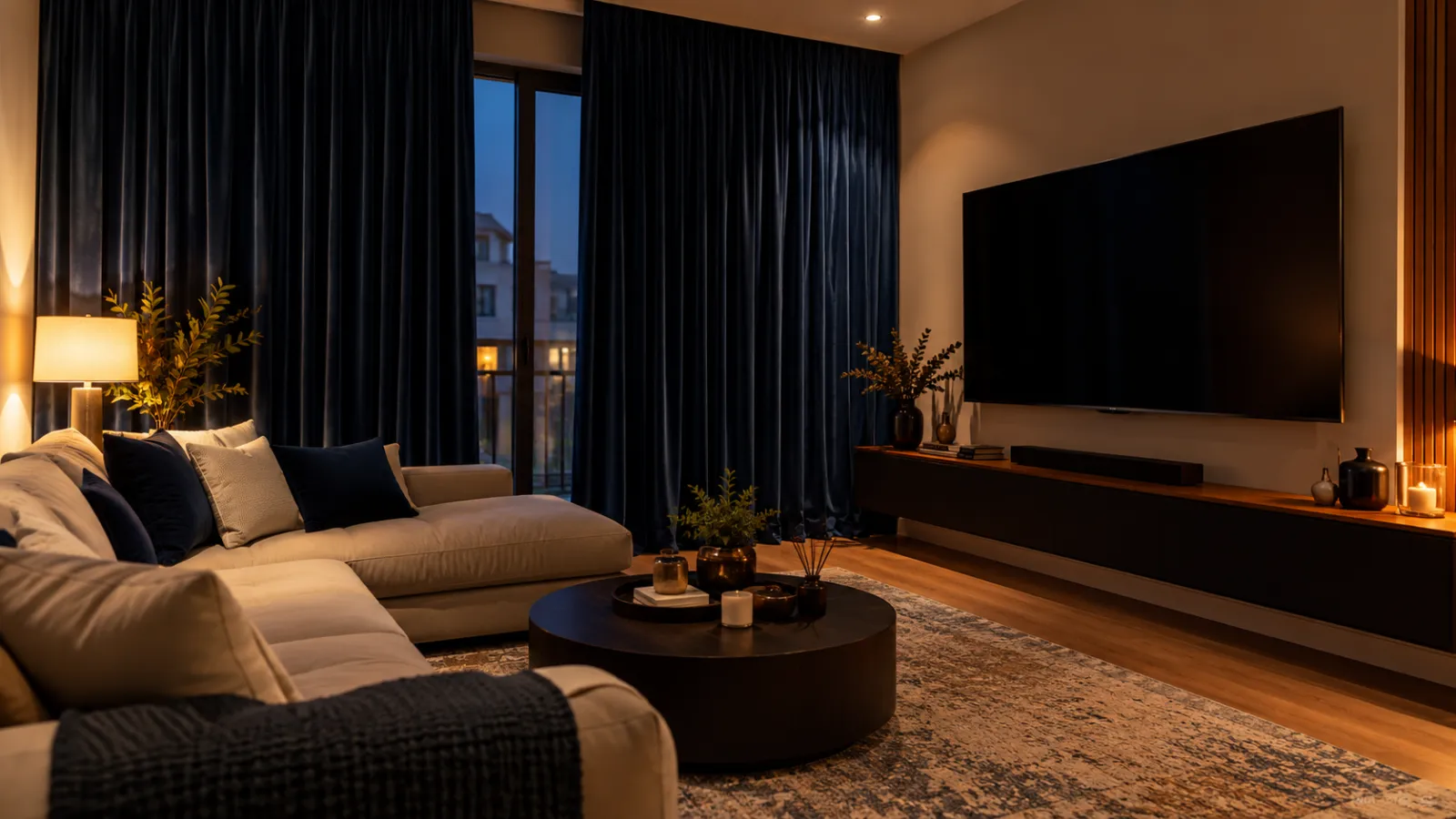
Deep colors such as charcoal, navy, burgundy, and black give the classic theatre feel. Read more in our velvet curtains guide.
Best for: luxury home cinemas and villa media rooms.
3. Soundproof Curtains
If your cinema room faces a busy road, or you want to keep loud movie sound from reaching the bedrooms, choose soundproof curtains. They’re built with several layers, including a dense acoustic layer, so they absorb far more sound than a standard curtain and block out light completely.
Be realistic about what they do: soundproof curtains reduce noise noticeably, but no curtain makes a room completely silent. Deep bass and gaps around the window frame also need sealing.
Best for: cinema rooms near roads, in apartments with shared walls, or next to bedrooms.
4. Blackout Roller Blinds
A blackout roller blind is a single flat panel of blackout fabric that rolls up neatly out of sight. It looks clean, is easy to wipe and works well on its own in a media room that’s also used in the daytime.
On its own, a roller blind leaves a thin gap of light at each side. That’s why it works best as the first layer, with a blackout curtain in front. Not sure between roller and Roman? See our Roman vs roller blinds comparison.
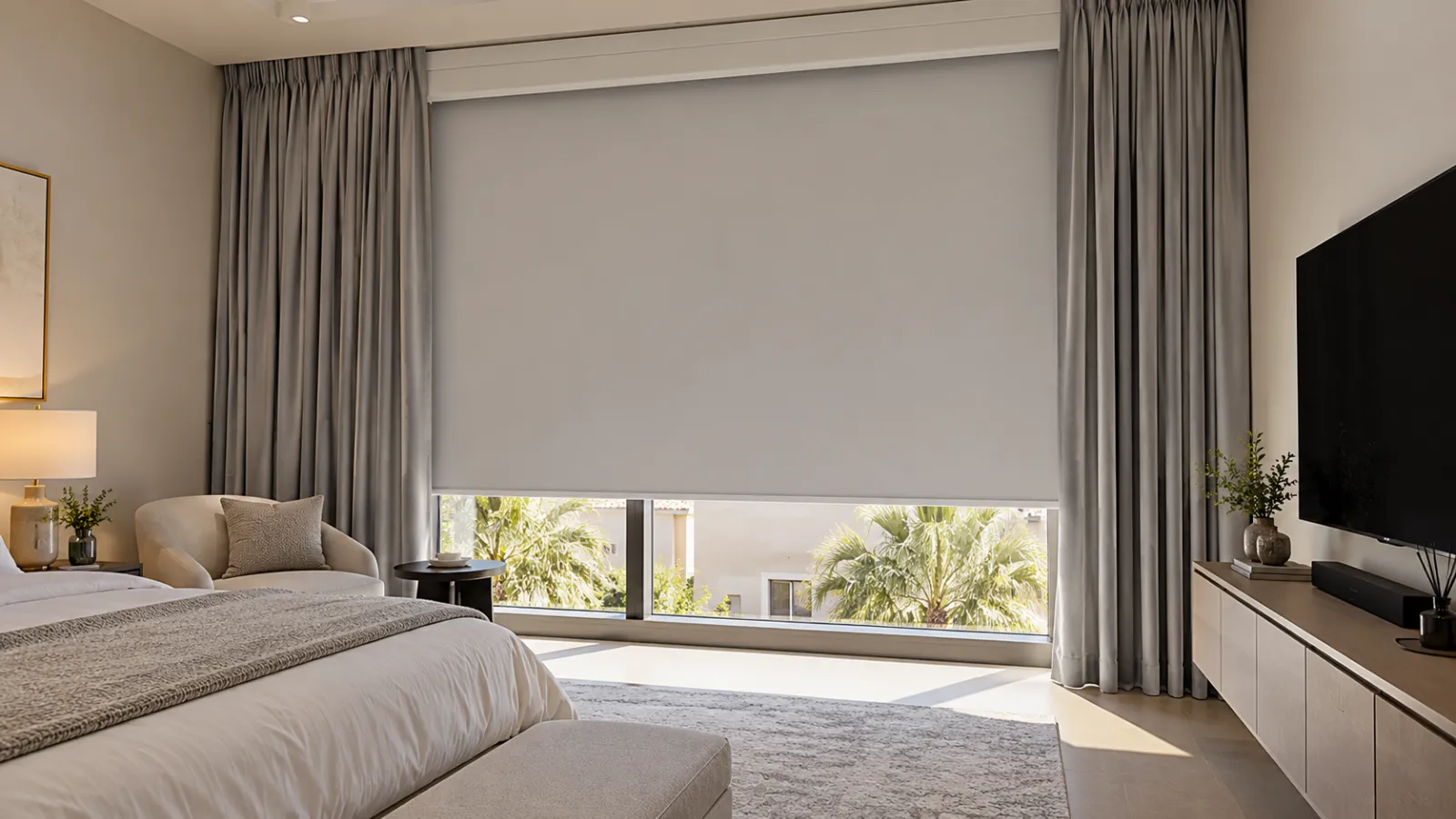
Best for: minimal rooms, and layering under curtains.
5. Roman Blinds With Blackout Lining
Roman blinds fold up into soft pleats and give a tailored, more decorative look than a roller blind. With a blackout lining, they make a good choice for smaller windows, or a media room that also works as a guest room or study.
Best for: smaller windows and multi-use rooms.
6. Motorized Curtains and Blinds
Motorization doesn’t change how much light a fabric blocks, but it changes how you use the room. With motorized curtains or motorized blinds, you can close every window from your seat with a remote, an app, or a voice command, or set a “movie” scene that closes the blinds and curtains together.
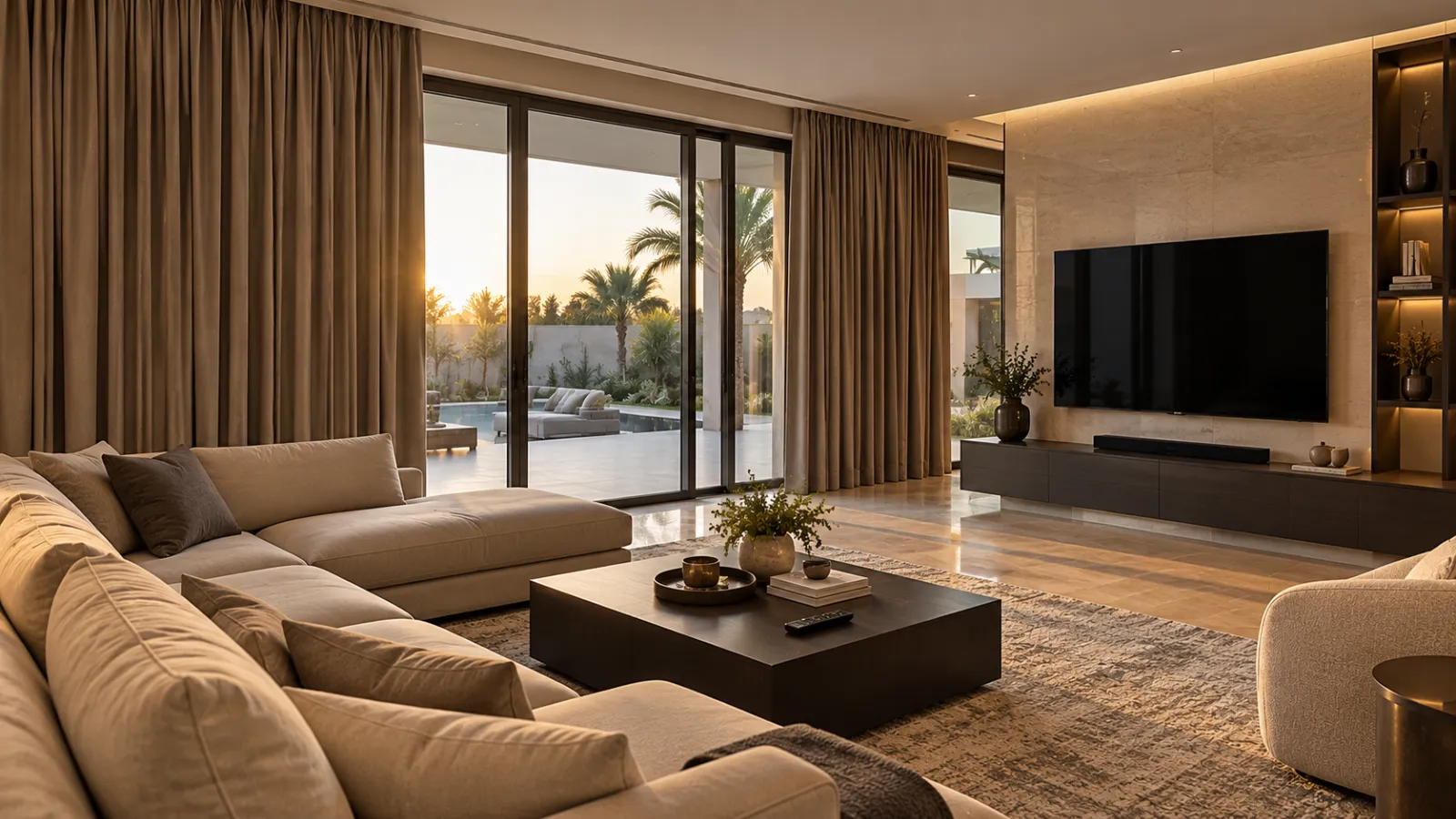
It also makes sense for heavy curtains. Velvet and soundproof curtains are heavy to pull by hand on a wide window, and a motorized track handles them easily. Motors also mean no cords hanging in a dark room where children are moving around.
Best for: large windows, full-wall curtains, and anyone who wants one-touch control.
What to Avoid in a Home Theater
- Light-filtering or sheer fabrics on their own. They soften light but don’t darken the room. Keep sheers only as a daytime layer behind blackout curtains.
- Venetian and mini blinds as the only layer. Light still gets through between the slats even when they’re closed, and metal slats can rattle when the AC or subwoofer runs.
- Shiny fabrics such as satin or silk-look. They reflect screen light. Choose matte fabrics such as velvet, linen-look or plain polyester.
- Curtains that stop at the window frame. Light comes in around the edges. Extend the track past the window.
How to Stop Light Leaking Into Your Home Theater
Blackout fabric blocks light from passing through. Most light that gets into a home cinema comes in around it. Here’s where it leaks, and how to fix it. Most of these fixes come down to how the track is installed, so it pays to get the curtain fixing right.
| Where light gets in | Why it happens | How to fix it |
|---|---|---|
| Sides of the window | Curtain or blind is the same width as the window | Extend the curtain track 15–25 cm past the window on each side, or run it wall to wall |
| Top of the curtain | Light escapes over the rod or track | Use a ceiling-mounted track so the curtain starts at the ceiling |
| Bottom of the curtain | Hem stops short of the floor | Floor-length curtains with the hem just touching the floor |
| Middle, where two panels meet | Panels don’t overlap when closed | Ask for overlapping panels at the center |
| Sides of a roller blind | Inside-mounted blinds leave a small gap at each side | Mount the blind outside the frame so it overlaps, or add a blackout curtain in front |
| Through slats | Venetian and wooden blinds can’t seal completely | Pair them with a blackout curtain, or switch to a roller or Roman blind |
The Best Home Cinema Setup for Each Type of Room
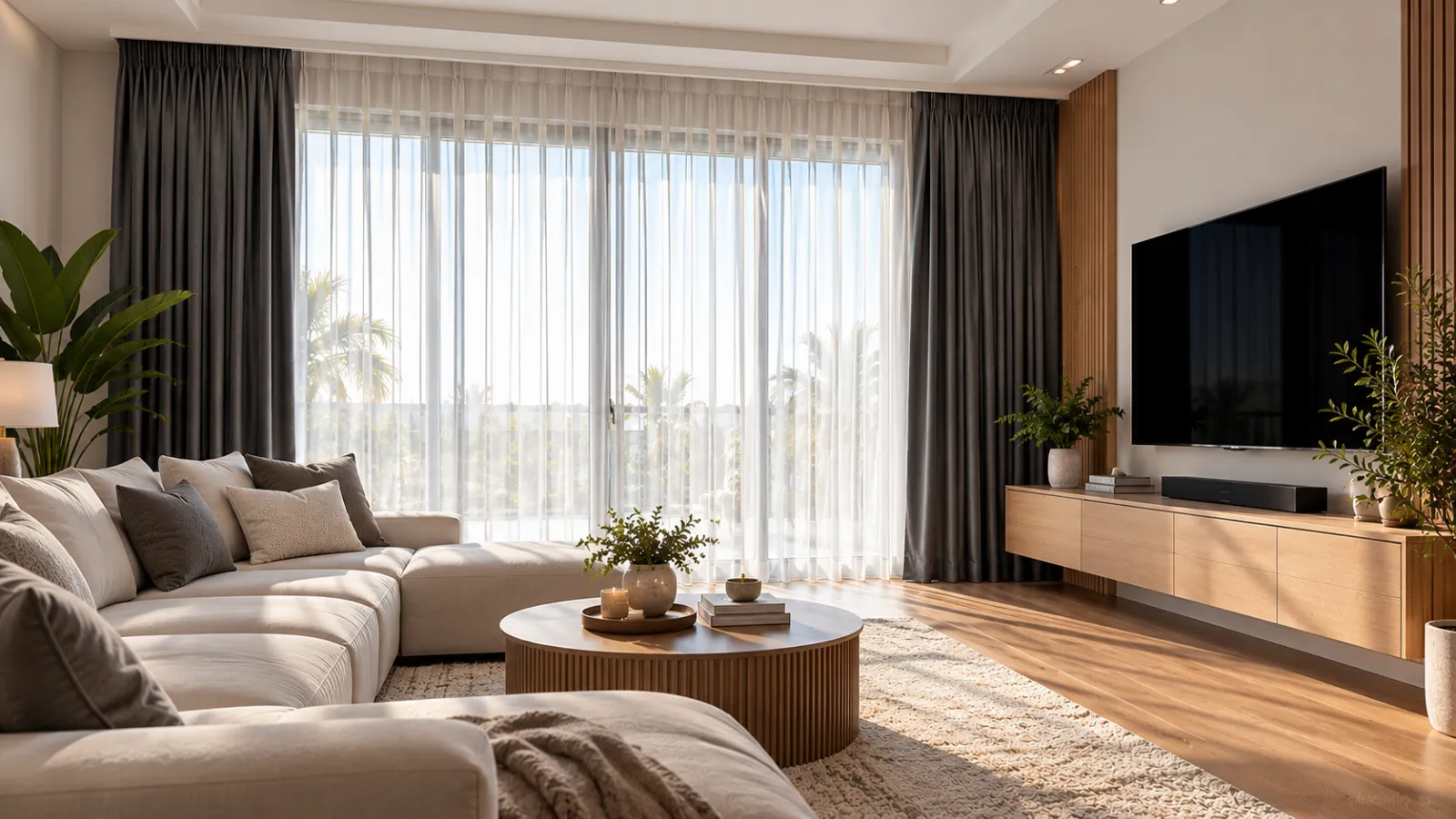
- Dedicated cinema room: wall-to-wall blackout or velvet curtains on a ceiling track, layered over a blackout roller blind. Choose a dark color and motorize the curtains.
- Living room with a media wall: blackout or living room curtains in a neutral color, layered over sheers. Keep the sheer layer for daylight, and close the blackout layer for movie nights. Living room blinds work if you prefer a minimal look.
- Bedroom with a TV or projector: a blackout roller blind with blackout curtains in front. It doubles as the best setup for sleep.
- Apartment with shared walls: soundproof curtains on the window and on any wall you share with neighbors.
Choosing the Best Curtain Color and Fabric for a Home Cinema
- Go dark and matte. Charcoal, navy, deep grey, burgundy, and black absorb stray screen light, so the picture looks sharper. Pale curtains bounce light around the room.
- Match the walls. Curtains in the same dark tone as the walls make the window disappear when the lights go down.
- Choose heavy fabric. Thicker, denser fabric blocks more light and absorbs more sound than thin fabric, even with a blackout coating.
Dubai Tip: Keep the Heat Out of Your Home Cinema
In the UAE, a closed home cinema can heat up fast in summer, especially behind west-facing glass. Choose blackout curtains with a light-colored thermal backing facing the window. You can make the front as dark as you like, while the back reflects the sun’s heat back out through the glass. This keeps the room cooler and protects dark fabrics from fading.
Planning a home cinema in Dubai? We visit your home, measure every window and bring blackout, velvet and soundproof fabric samples so you can see them in your own room, free of charge.
Home Theater Window Treatment FAQs
What is the best window treatment for a home theater?
Blackout curtains layered over a blackout roller blind. The blind blocks most light, and floor-to-ceiling curtains on a ceiling track cover the gaps at the edges. Velvet or soundproof curtains also absorb sound.
Are blackout curtains or blackout blinds better for a home theater?
Curtains usually darken a room more because they can run wall to wall and floor to ceiling, covering the edges where blinds leak light. Blinds look cleaner and fit neatly inside the frame. For the darkest room, use both together.
Do curtains improve home theater sound?
Yes, thick curtains absorb some of the sound that would otherwise bounce off the window glass, so dialogue sounds clearer and there is less echo. Velvet and soundproof curtains with 2 to 2.5 times fullness work best. They reduce noise but do not make a room fully soundproof.
How do I stop light coming in around my curtains?
Use a ceiling-mounted track, extend it 15 to 25 cm past the window on each side, choose floor-length curtains and make sure the two panels overlap in the middle. Adding a blackout blind behind the curtains blocks most of what is left.
What color curtains are best for a home cinema?
Dark, matte colors such as charcoal, navy, deep grey, burgundy or black. They absorb stray screen light instead of reflecting it, so the picture looks sharper. Avoid shiny fabrics like satin.
Are motorized blinds worth it for a home theater?
They are worth it for large windows or heavy curtains. You can close every window from your seat with a remote, app or voice command, or set a movie scene that closes everything at once. Motorization does not change how much light the fabric blocks.
Can I use Venetian or wooden blinds in a home theater?
Only with a blackout curtain in front. Light gets through between the slats even when they are closed, so on their own they cannot darken a room fully.
Choosing the Right Home Theater Window Treatments
For most home theaters, the winning setup is simple: a blackout blind as the first layer, floor-to-ceiling blackout or velvet curtains in front, a track that runs past the window, and a dark, matte color. Add soundproof curtains if noise is a problem, and motorize the lot if you want the room to go dark at the press of a button.
If you’re not sure which option suits your room, our team can advise during a free home visit anywhere in Dubai.








1 Comment.
[…] colors still have their place. Navy, charcoal and emerald look dramatic in a master bedroom or home theater, where you want a cozy […]