Curtains are grouped in six ways: by heading style (how the top is made and how it hangs), by fabric, by function (what they do to light, heat and sound), by length, by how they operate, and by the space they’re made for. Most curtains belong to several groups at once — a blackout velvet pinch pleat, for example. Pick one from each group, and you’ve described exactly what you need.
This guide covers 38 types, what each is best for, how each holds up in Dubai’s sun, and the curtain trends heading into 2027.
Which curtain do you need? A quick picker
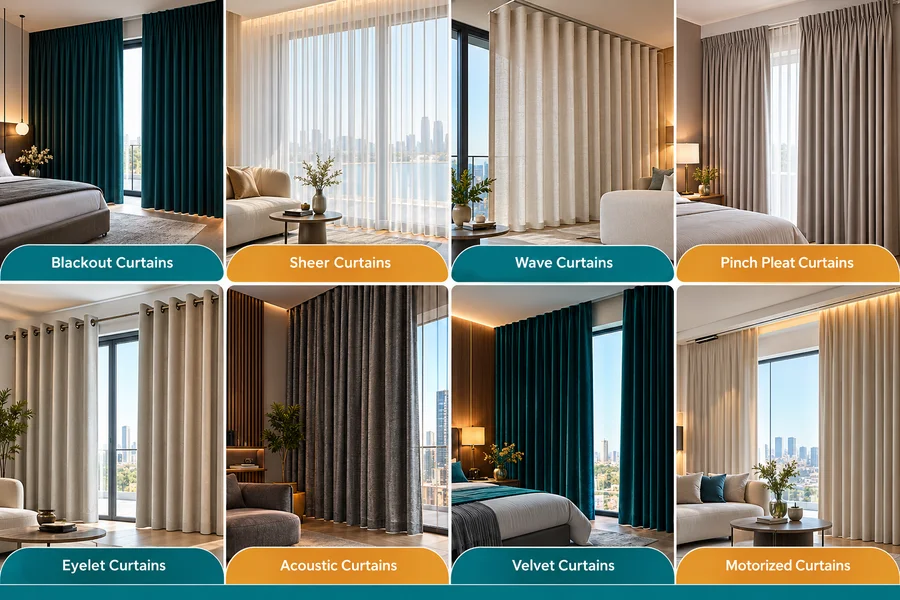
| If you want… | Choose | Why |
| A dark bedroom | Blackout curtains | Coated or lined fabric blocks almost all light |
| Light and privacy by day | Sheer curtains | Filters sun and blocks the view in |
| Both, at different times | Layered sheer + blackout | Each on its own track; use either |
| A modern, hotel-style look | Wave curtains | Even S-shaped folds on a slim track |
| A tailored, formal look | Pinch pleat curtains | Structured pleats; suit villas and majlis |
| Easy, casual and budget-friendly | Eyelet curtains | Slides on a rod; simple to hang |
| A quieter room | Soundproof curtains | Dense, multi-layer fabric absorbs noise |
| Luxury and warmth | Velvet curtains | Heavy, rich drape; insulates |
| A relaxed, natural feel | Linen curtains | Soft texture; the look of 2027 |
| Curtains that move on a schedule | Motorized curtains | Remote, app, voice or timer |
Types of curtains by heading style
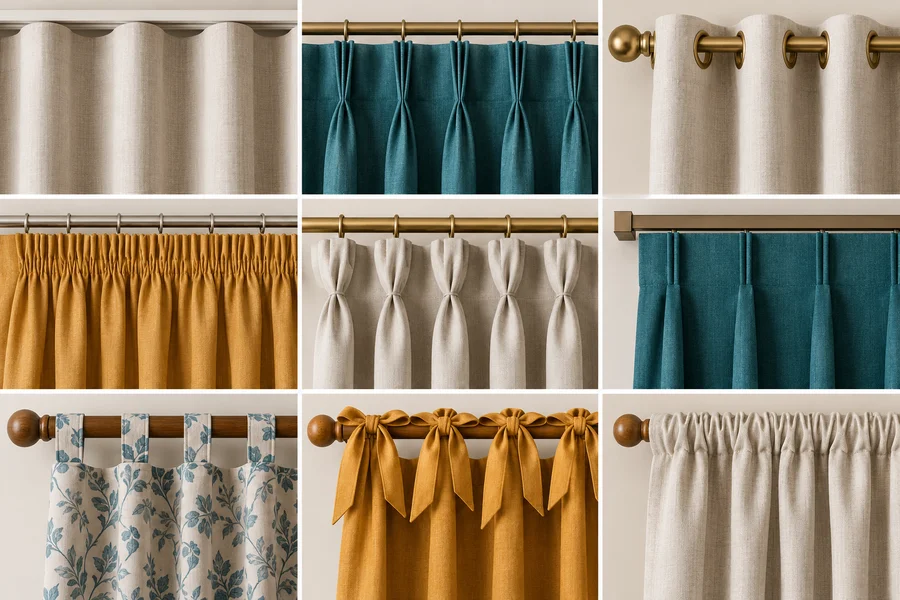
The heading is the top of the curtain. It decides how the folds fall, what the curtain hangs on, and how much fabric you need.
1. Wave curtains (ripple fold, S-fold)
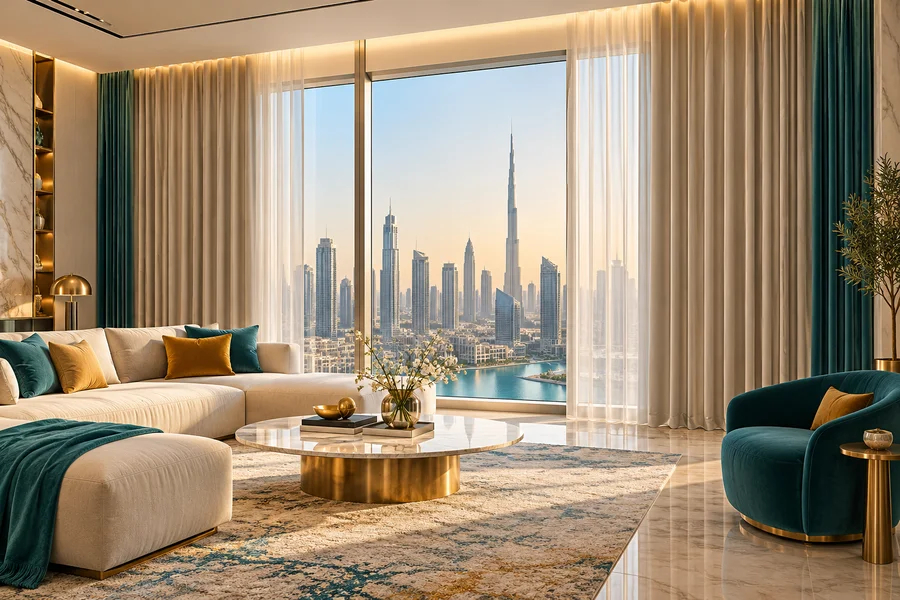
The fabric clips onto a track at fixed spacing, so it falls in identical S-shaped waves whether open or closed. Clean, modern, and the standard in Dubai hotels and new apartments. Wave is also the most popular heading for motorization.
Best for: floor-to-ceiling glass, modern living rooms, ceiling tracks. See wave curtains.
2. Pinch pleat curtains
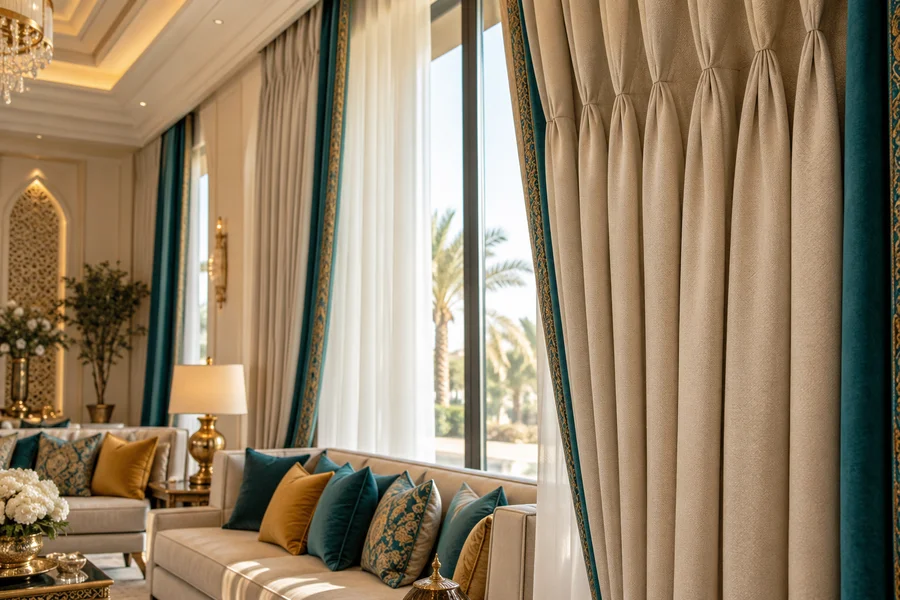
Fabric is gathered into tight, stitched pleats, double or triple, at regular intervals. Tailored and formal, with full, structured folds that hold their shape.
Best for: villas, majlis rooms, formal dining, bedrooms. See pinch pleat curtains.
3. Eyelet curtains (grommet)
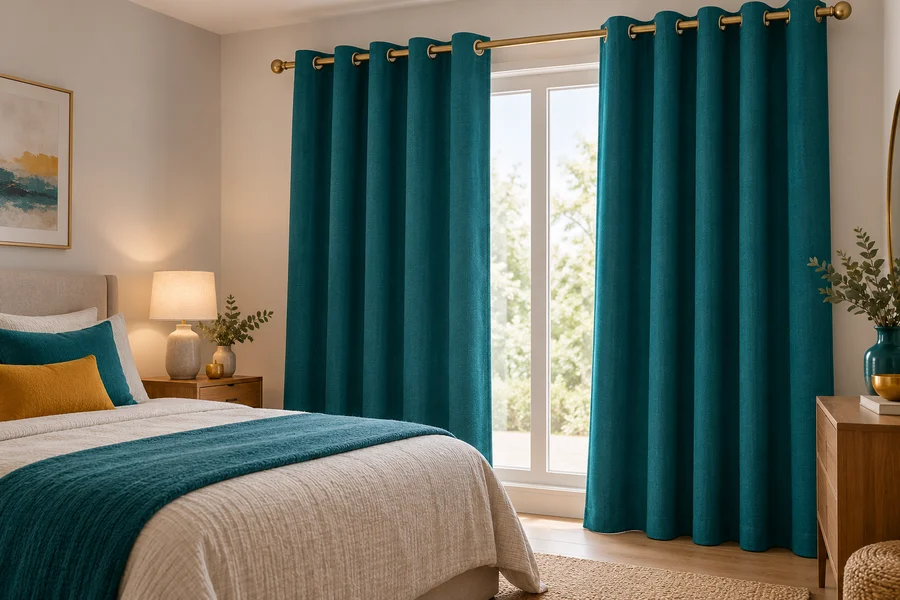
Metal rings are punched into the top of the fabric, and the curtain slides straight onto a rod. Deep, casual folds and very easy to open by hand.
Best for: bedrooms, rentals, kids’ rooms. Note: eyelets need a rod, so they can’t be motorized. See eyelet curtains.
4. Pencil pleat curtains
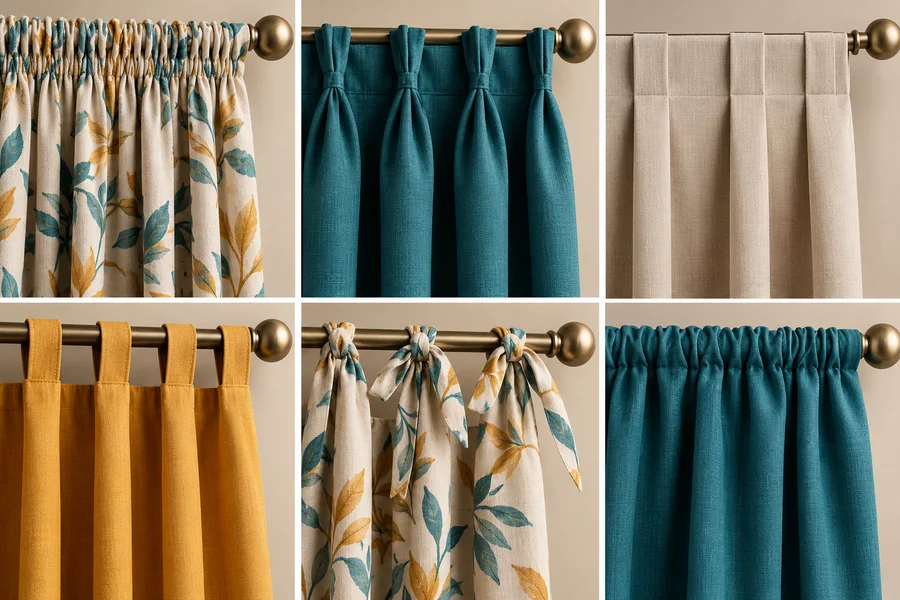
A tape on the back gathers the fabric into tight, narrow folds like a row of pencils. Softer and less formal than pinch pleat, and usually more affordable.
Best for: bedrooms and traditional rooms on a budget.
5. Goblet pleat curtains
Each pleat is shaped into a rounded cup, like the bowl of a wine glass. Grand and decorative, and best on curtains that stay mostly closed or tied back.
Best for: formal reception rooms, classic villas.
6. Box pleat curtains
Flat, box-shaped folds that sit evenly across the top. Tailored, symmetrical, and quieter than pinch pleat.
Best for: dining rooms and study rooms with a classic look.
7. Tab top curtains
Fabric loops sewn along the top slide over a decorative rod. Relaxed and simple, but harder to pull than eyelet.
Best for: decorative windows that stay open, casual spaces.
8. Tie-top curtains
Fabric ties knotted around the rod. The most informal heading, with a soft, handmade look.
Best for: sheers, kids’ rooms, outdoor gazebos.
9. Rod pocket curtains
A sewn channel at the top that the rod slides through. Gathered and simple, but the curtain is hard to open and close, so it’s mostly used for fixed panels.
Best for: sheers and decorative panels that stay closed.
Types of curtains by fabric
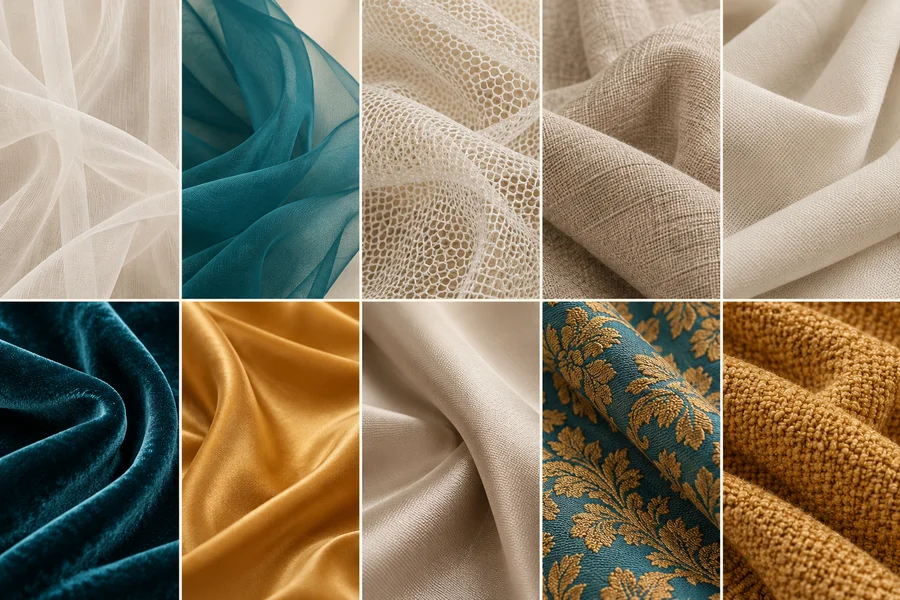
Fabric decides how the curtain looks, how long it lasts in the sun, and how easy it is to clean. In Dubai, sun resistance matters most.
10. Sheer curtains (voile)
Lightweight, translucent fabric that softens daylight and blocks the view in during the day. At night, with lights on inside, you can see through — so pair them with a blackout layer in bedrooms.
Best for: living rooms, layering behind blackout. See sheer curtains.
11. Chiffon curtains
A finer, floatier sheer with a slight shimmer. More delicate than voile, and very elegant in tall windows.
Best for: formal living rooms, bedrooms as the inner layer. See chiffon curtains.
12. Net curtains
An open-weave sheer that gives daytime privacy while letting air and light through. Hard-wearing and easy to wash.
Best for: street-facing windows, kitchens, ground-floor villas. See net curtains.
13. Linen curtains
Natural flax fiber with a soft, slightly slubbed texture that filters light beautifully. Pure linen creases and can fade in strong sun, so in Dubai choose a linen blend or a linen-look polyester, or line it on sun-facing windows.
Best for: living rooms, relaxed modern interiors. See linen curtains.
14. Cotton curtains
Breathable, matte, and easy to print, cotton works well for patterns. It can shrink when washed and fade in direct sun, so it works best lined or on shaded windows.
Best for: bedrooms, kids’ rooms, patterned designs. See cotton curtains.
15. Velvet curtains
A dense pile fabric with a deep, rich drape. Heavy enough to block some light and noise and to insulate a room.
Best for: master bedrooms, majlis, media rooms. See velvet curtains.
16. Silk curtains
The most luxurious curtain fabric, with a natural sheen. Silk is also the most fragile in sunlight and humidity: keep it on shaded windows, always lined, and away from bathrooms and kitchens.
Best for: formal reception rooms and dining rooms with little direct sun. See silk curtains.
17. Polyester curtains
The workhorse fabric. It resists fading, creasing, and shrinking, holds color in strong sun, and most can go in the washing machine. Polyester can now convincingly imitate linen, silk, and velvet.
Best for: sun-facing windows, rentals, families — almost any room in Dubai.
18. Jacquard curtains
The pattern is woven into the fabric rather than printed on it, so it doesn’t fade and has a raised texture. Damask is a classic jacquard.
Best for: formal living rooms, majlis, traditional interiors.
19. Textured weave curtains (bouclé, slub, wool-look)
Fabrics with a visible, tactile surface — looped bouclé, slubbed linen, wool-look weaves. One of the defining looks of 2027: texture instead of pattern.
Best for: modern living rooms and bedrooms that need warmth without color.
Types of curtains by function
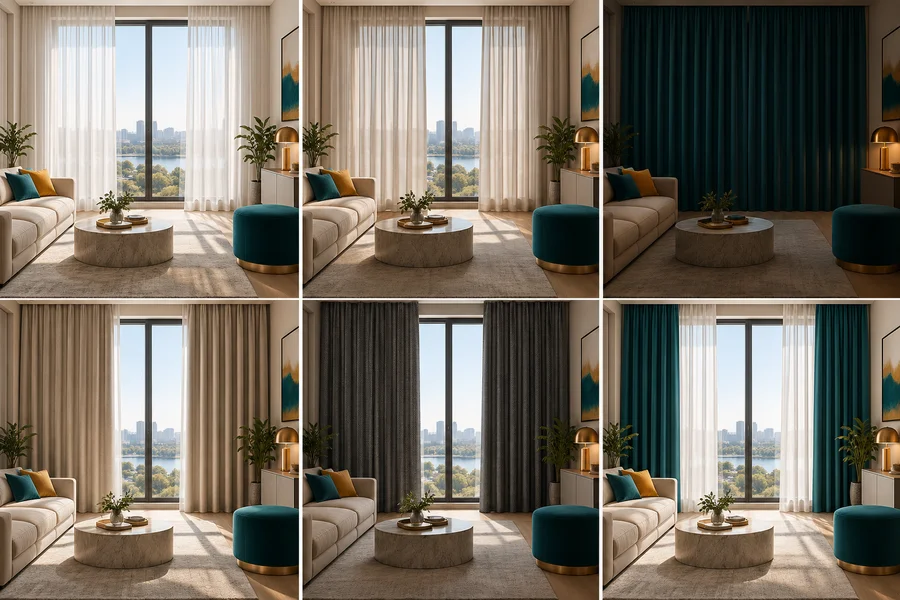
These are defined by what the curtain does, and you can combine them with almost any fabric or heading.
20. Blackout curtains
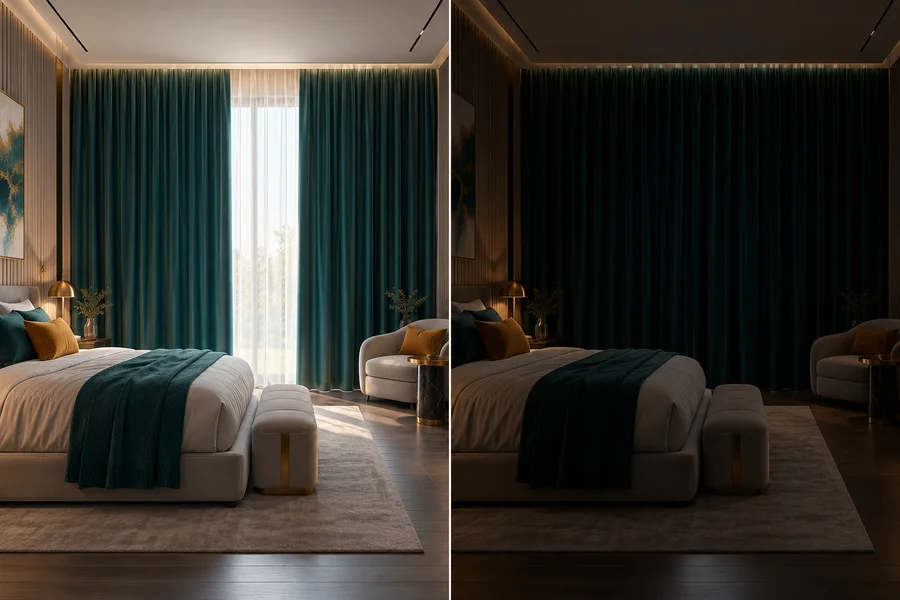
A coated, triple-weave or lined fabric that blocks almost all light. The thickness of the fabric alone doesn’t make a curtain blackout — the coating or lining does. Choose a white or light backing for sun-facing windows to reflect heat.
Best for: bedrooms, nurseries, media rooms, shift workers. See blackout curtains.
21. Dim-out (light-filtering) curtains
A medium-weight fabric that cuts glare and softens light without darkening the room. The middle ground between sheer and blackout.
Best for: living rooms and home offices that get strong sun.
22. Thermal curtains
Curtains with an insulating layer, usually a foam or thermal lining. Closed before the afternoon sun reaches the glass, they keep heat out so the AC works less.
Best for: west- and south-facing rooms in Dubai.
23. Soundproof (acoustic) curtains
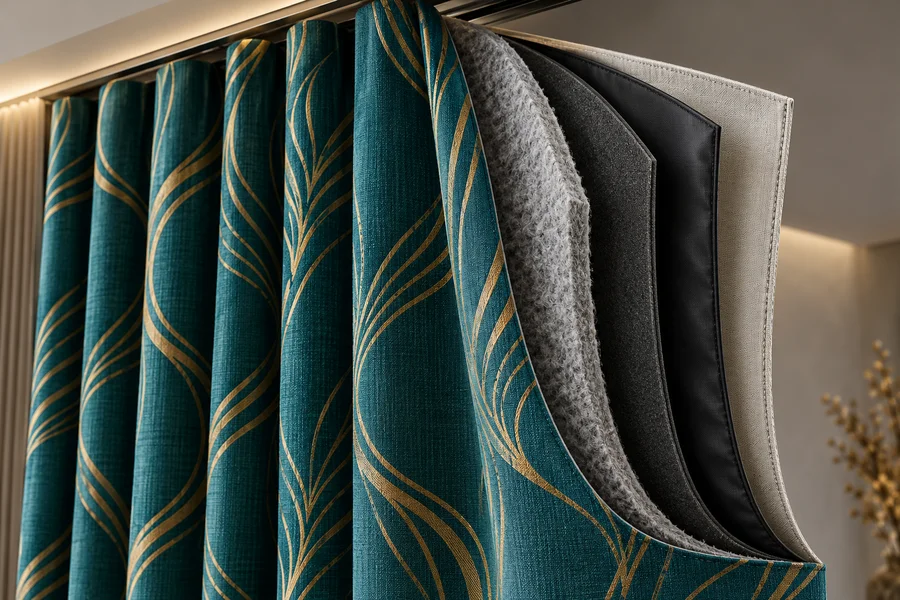
Dense, multi-layer fabric that absorbs sound and reduces echo. They lower noise rather than eliminate it, and work best floor-to-ceiling and wider than the window.
Best for: rooms on busy roads, near construction, home studios and offices. See soundproof curtains.
24. Fire-retardant curtains
Fabric treated or made to resist catching fire and to slow the spread of flame. Hotels, offices and public buildings in Dubai typically need certified fire-retardant fabric to pass Civil Defense inspection.
Best for: hotels, offices, restaurants, schools, theatres.
25. Layered (double) curtains
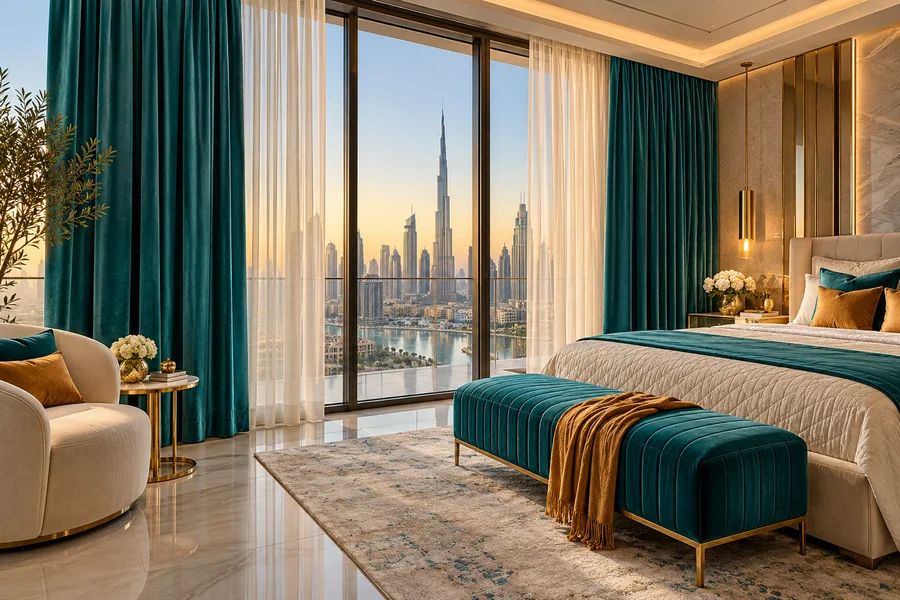
A sheer and a blackout on two separate tracks, so you can use either one. Sheer by day for light and privacy; blackout at night or when the afternoon sun hits. The most flexible setup for Dubai homes.
Best for: bedrooms and living rooms. Here’s how to layer sheer and blackout curtains.
Not sure which you need? Our team visits your home, checks the light in each room, and brings samples of every fabric. Book a free home visit on WhatsApp
Types of curtains by length and shape
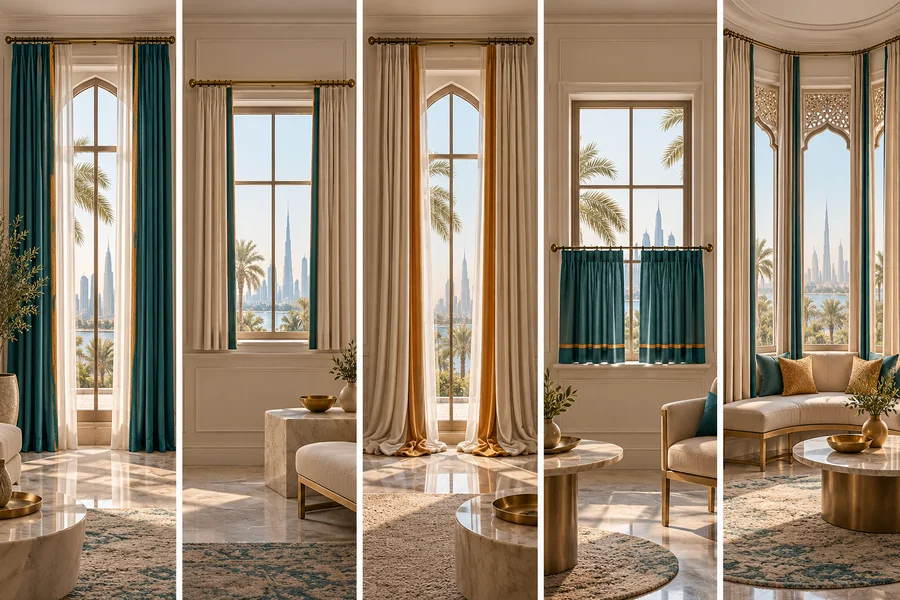
26. Floor-length curtains
Finished about 1 cm above the floor. The standard for living rooms and bedrooms: they make windows look taller, and rooms look finished, and the hem stays clear of dust.
27. Sill-length curtains
Ending at or just below the window sill. Practical where something sits under the window — a radiator, a desk, a kitchen counter.
28. Puddle curtains
Fabric that pools 5–15 cm on the floor for a romantic, dramatic look. Beautiful in photos, but it collects dust and gets caught by cleaners on tiled floors, so keep it for low-traffic formal rooms.
29. Café curtains
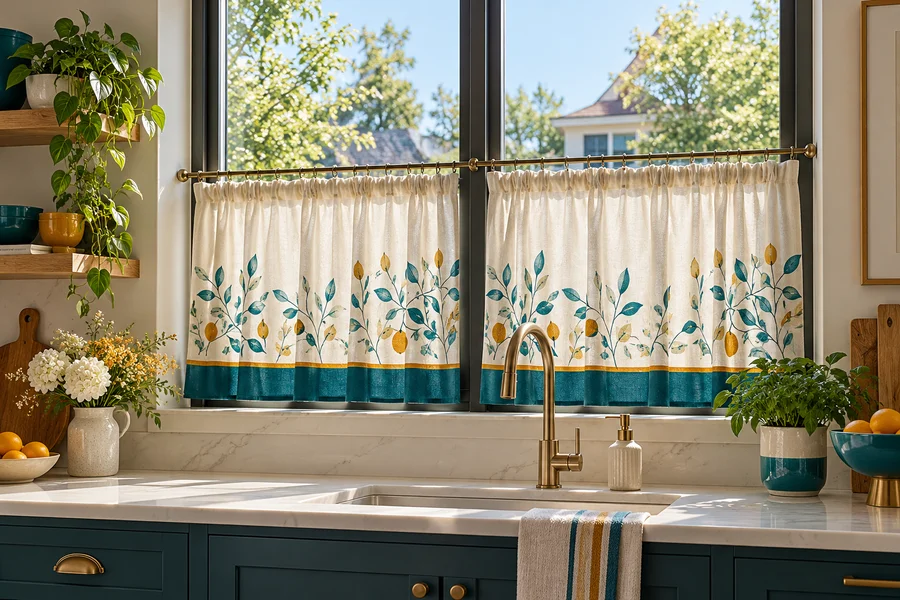
Short curtains covering only the lower half of the window. Privacy at eye level with daylight coming in above. One of the looks designers brought back in 2026.
Best for: kitchens, bathrooms, ground-floor street-facing windows.
30. Bay window curtains
Curtains made for a bay or corner window, on a track bent to follow the shape so they run smoothly around the angles.
Best for: villas with bay windows and corner glass.
Types of curtains by operation
31. Motorized curtains
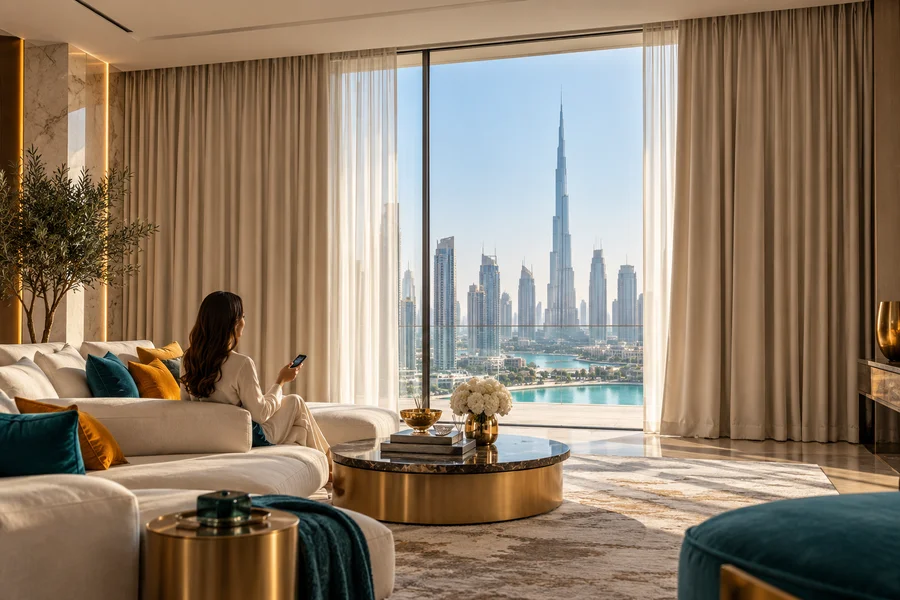
A small motor runs the curtain along its track. Control it by remote, wall switch, phone app or voice assistant, or set it to open at sunrise and close before the afternoon sun. Motorizing works with wave, pinch pleat and pencil pleat headings on a track — not eyelets on a rod. In 2027, motorization is fast becoming standard in new Dubai homes rather than an extra.
Best for: floor-to-ceiling glass, tall and wide windows, heavy blackout curtains, smart homes. See motorized curtains.
Types of curtains by space
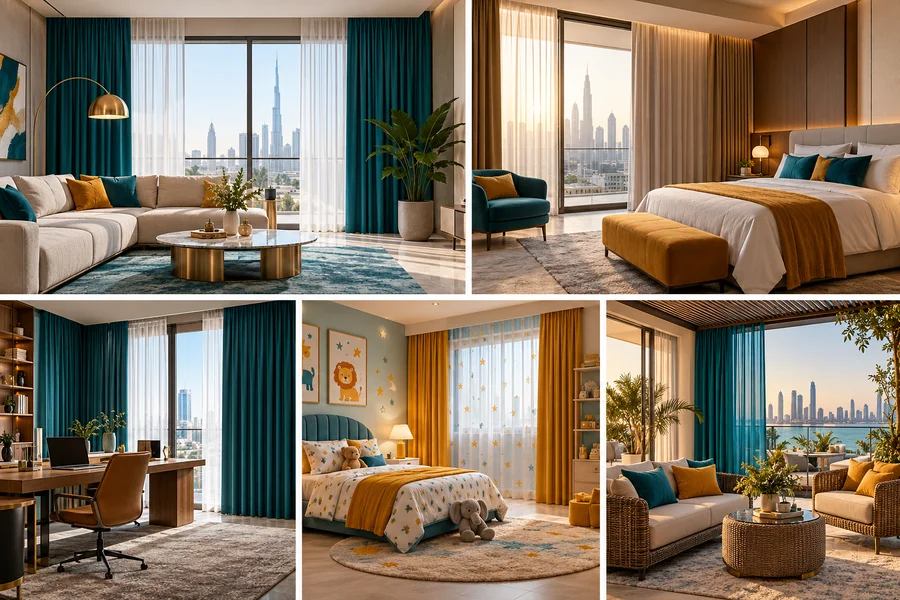
32. Living room curtains
Usually layered: a sheer for daytime and a heavier curtain for evenings and afternoon sun. Wave or pinch pleat, floor-length. See living room curtains.
33. Office curtains
Glare control for screens, privacy for meeting rooms and cabins, and fabrics that meet fire-safety rules. Sheer or dim-out fabric on wave tracks is the usual choice. See office curtains.
34. Hotel curtains
The hotel standard is a blackout and a sheer on a double ceiling track, often motorized, in certified fire-retardant fabric that stands up to daily use. See hotel curtains.
35. Bed curtains (canopy curtains)
Curtains hung around a four-poster or canopy bed rather than at a window. Sheers give a soft, airy look; heavier fabrics add privacy and warmth. See bed curtains.
36. Door curtains
Curtains for doorways, wardrobes and room dividers, or for glass and balcony doors. They separate spaces without a solid door. See door curtains.
37. Kids’ room curtains
Blackout for daytime naps, washable fabric for sticky hands, and no loose cords. A wave track or motorized track is the safest option.
38. Outdoor curtains
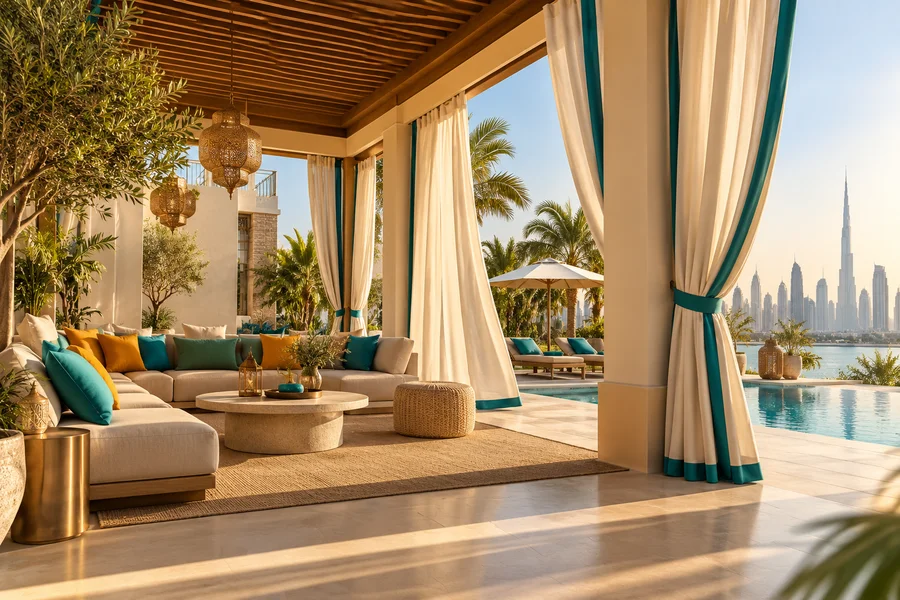
Curtains for terraces, pergolas and majlis tents, made from outdoor-grade fabric that resists UV, moisture and mildew. Indoor fabric fades and rots outside within a season. For full sun and wind protection on a balcony, look at outdoor blinds as well.
Curtain trends for 2027
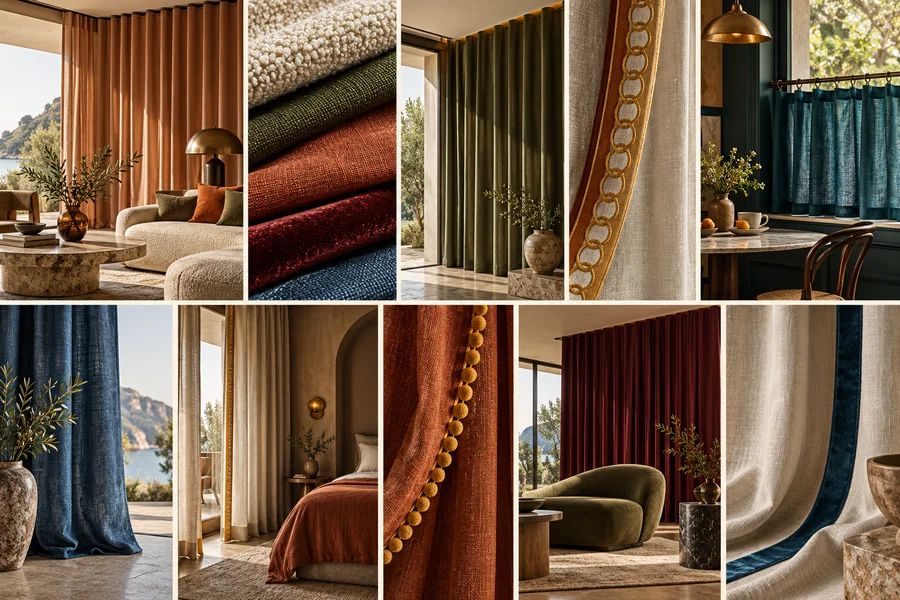
The 2027 direction builds on 2026 rather than replacing it: warmer colors, more texture, and curtains that work harder. Here’s what designers are choosing, and how each trend works in a Dubai home.
- Layering as the default. Sheer, blackout and sometimes a blind, all on one window. In Dubai this is less a trend than common sense — the sheer handles the day, the blackout handles the afternoon sun and the night.
- Earth tones. Olive, terracotta, clay and deep oxblood are replacing cool greys, with lapis and denim blue taking over from navy as the accent. On west-facing windows, choose these in polyester or lined, so they don’t fade unevenly.
- Texture over pattern. Slubbed linen, bouclé, velvet and wool-look sheers instead of flat, plain fabric. Texture adds warmth to a neutral room without adding color.
- Heritage and botanical patterns. Watercolor florals, hand-painted paisley and softened damask, in muted rather than bright colors.
- Ceiling tracks and ripple folds. Visible rods are giving way to tracks hidden in the ceiling, with wave curtains running floor to ceiling. Pelmets are coming back, in clean, simple shapes.
- Motorization as standard. App and voice control are now expected in new homes rather than added later — especially in Dubai towers with floor-to-ceiling glass.
- Curtains that perform. Buyers are choosing fabric for what it does — sound absorption, light control, insulation — as much as for how it looks.
- Trims and edging. Contrast borders, tape trims and fringing turn a plain curtain into a considered one. A carry-over from 2026 that’s still growing.
- Café curtains. Half-height curtains for kitchens and street-facing windows, revived in 2026.
How to choose between them
Work through the groups in order:
- Function first. How much light, privacy, heat, and noise control does the room need? Blackout, dim-out, sheer, or layered.
- Then fabric. What will survive this window’s sun? On west- and south-facing windows, polyester or lined fabric.
- Then heading. Wave for modern and wide glass, pinch pleat for formal rooms, eyelet for simple and casual.
- Then length and operation. Choose floor-length for most rooms; choose motorized for tall windows and heavy curtains.
Take one answer from each, and you have your curtain; for example, a lined linen-look blackout, wave heading, floor-length, motorized.
Get the right curtains for every room
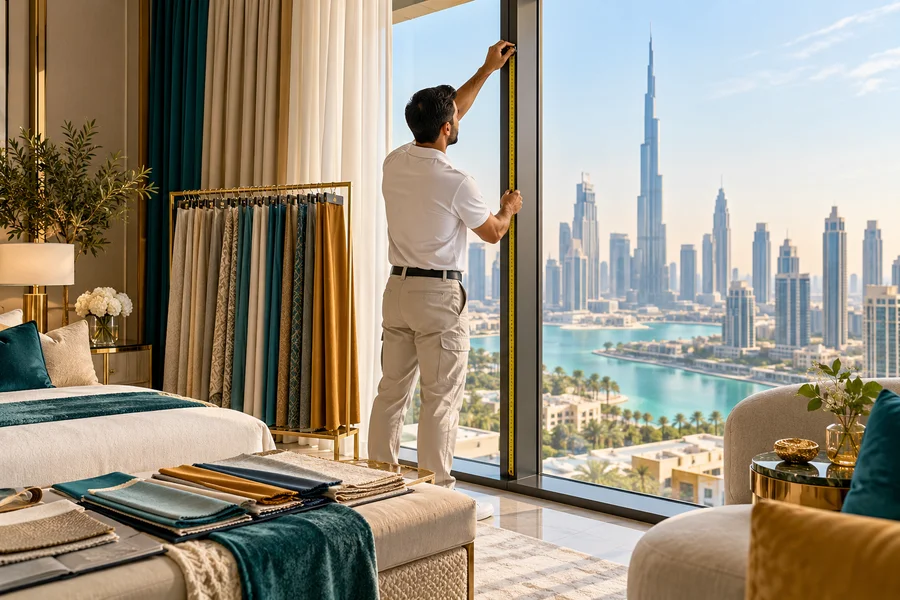
Select Blinds makes curtains to measure in all the main types in this guide, and installs across Dubai. We’ll visit, measure each window, and bring fabric samples so you can see them in your own light.
Book a free home visit. Message us on WhatsApp or call +971 50 293 3585. Or browse all our curtains.
Frequently asked questions
What are the main types of curtains?
Curtains are grouped by heading style, fabric, function, length, operation and the space they’re made for. The most popular types in Dubai homes are sheer, blackout, wave, pinch pleat, eyelet and motorized curtains.
What is the difference between curtains and drapes?
Drapes are heavier, lined and usually floor-length, with a formal look. Curtains can be any weight or length, including unlined sheers. In the UAE, the two words are mostly used to mean the same thing.
Which type of curtain is best for Dubai’s heat?
A blackout or thermal curtain with a white or light-colored backing, in polyester so it doesn’t fade. Closing them before the afternoon sun hits the glass keeps the room cooler, so the AC works less.
What curtains are in style for 2027?
Layered sheer and blackout curtains, earth tones like olive and terracotta, textured fabrics like slubbed linen and bouclé, wave curtains on hidden ceiling tracks, and motorized curtains as standard.
Which curtains block the most light?
Coated blackout curtains block the most light. Hang them on a ceiling track that extends 15–25 cm past the window on each side, so light can’t leak around the edges.
What is the difference between wave and pinch pleat curtains?
Wave curtains fall in even, S-shaped folds on a track and look modern. Pinch pleat curtains have stitched, structured pleats and look tailored and formal. Both can be motorized.
Are sheer curtains see-through at night?
Yes, when the lights are on inside. Sheers give privacy in daylight only, so rooms you use after dark need a blackout or lined curtain as well.
Which curtain fabric lasts longest in the sun?
Polyester and other synthetics resist fading and weakening best. Silk, cotton and pure linen fade fastest, so line them if they face west or south.